Projectworks Blog
Opinions, analysis and the occasional strong take on running a firm.
For those running and growing SMB consulting firms: from resourcing, to time and billing, proposals, margins, and how AI fits into the mix.
The Latest Posts

Proposal Process Efficiency: How to Personalize at Scale
According to Projectworks research, the average professional services firm submits 91 proposals a year at about 24 hours each, and senior people supply close to half of those hours. Writing faster won't fix that. Proposal process efficiency comes from deciding which sections deserve personalization and building client knowledge once per account, not once per proposal.
Projectworks Makes the Deloitte Fast 50 Three Years Running
Projectworks has been ranked No. 40 on the 2026 Deloitte Fast 50, with revenue growth of 165% over three years. It is our third year in a row on the index, and the streak matters more to us than where we placed.
AI Prompts for Consulting Firm Leaders: 5 Client and Cash Questions to Ask With MCP
Five client and cash questions firm leaders can answer before their next client or board meeting, by asking Claude, ChatGPT or Copilot connected to Projectworks through MCP. MCP is a common way for AI assistants to link to other software so they can look things up and make changes.
All Blog Content

A software company can pay its salesperson on deals signed, because someone else looks after the customer. Consulting firms rarely work that way. The client partner who wins the first project sells to that client for years and keeps it profitable, so if you're working out how to structure a sales incentive plan, it has to pay for both.

What is MCP? A plain-English guide to the Model Context Protocol for consulting firms, and what to check before you connect your data to your AI.

Projectworks has spent 25 years inside consulting firms. Here’s why we built a Consulting CRM around the proposal, and where it goes next.
Automate proposal creation without guessing at scope. A five-step workflow for consulting firms that drafts from CRM data and the actuals of past projects.
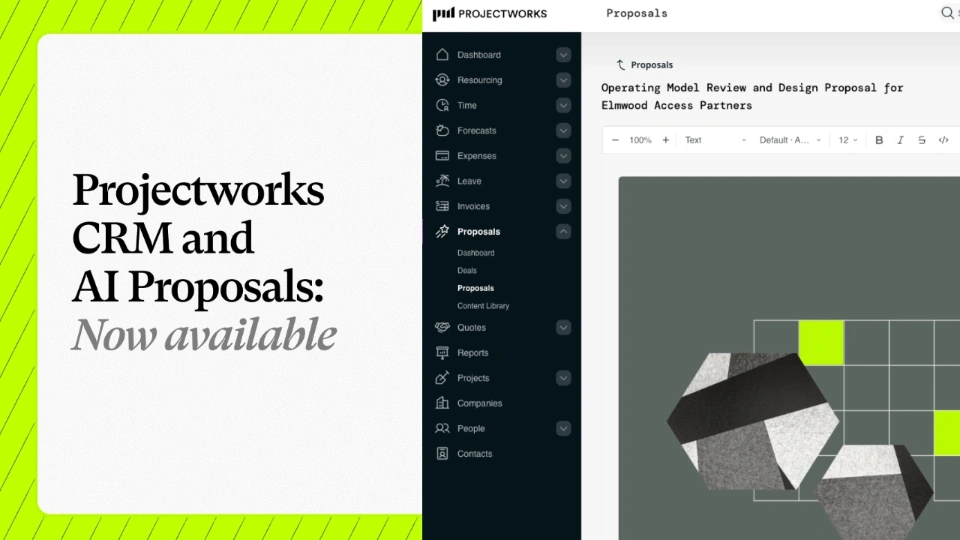
We're excited to announce that our Consulting CRM and Proposals are now available for anyone to use or try out. In just three months, a fast-growing group of firms have been running their pipeline and proposals in Projectworks as part of our early access group, and the results have blown us away.

E-invoicing sends invoices straight into your client's finance system via Peppol. Here's what NZ and Australian firms need to know and fix first.

Most pipeline coverage advice is written for SaaS. Here's how a consulting firm sets coverage by deal stage and plans for the clients it will lose.

Let’s say a consulting firm signs a $30,000 engagement in July and invoices the full fee upfront. The client pays quickly and the cash lands, but the work runs from July through September. By the end of July the firm has completed about one-third of the engagement - the project’s on track but the finance team have some work to do to match revenue with the costs incurred (the “matching principle” of having costs and revenue in the same period is a key accounting concept). Only a third of the project’s fee has been earned (because only a third of the work has been done), and the remaining $20k of revenue is deferred to a future period.
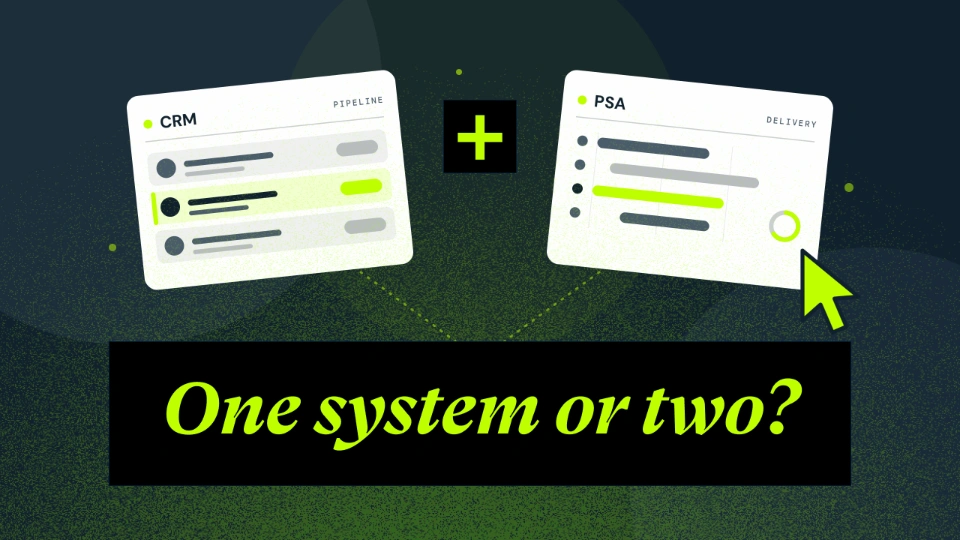
PSA software with built-in CRM, or a separate CRM? For consulting firms, one system usually wins. Here's why.

It's the end of September and expenses got a lot of love this month, with a couple of big changes you can start using today and more on the way! We've also made updates across financial reporting, resourcing, HubSpot, and invoicing, dive in to see what's new.
Most CRM features are built for sales teams that consulting firms don't have. See which CRM features consulting firms actually need, and which ones they’re paying for and never use.
You've heard AI is turning systems of record into systems of action. Here's what that shift actually means for CRMs and consulting firms.