

According to Projectworks research, the average professional services firm submits 91 proposals a year at about 24 hours each, and senior people supply close to half of those hours. Writing faster won't fix that. Proposal process efficiency comes from deciding which sections deserve personalization and building client knowledge once per account, not once per proposal.
Why is your proposal process so slow?
Proposal volume is climbing while deal sizes shrink. Projectworks platform data shows the average firm signed 66 projects in 2025, up from 18 in 2023, while the average signed budget fell 56%, from $74,828 to $32,632.
More projects at smaller budgets means more proposals for every dollar of revenue, so the cost of each one is multiplied.
Very little of that cost goes on the writing itself. The hours go into working out what the client cares about, who is making the decision, what went wrong last time and how similar work was priced, and then into rebuilding the pricing from scratch. Because that context lives in people's heads, the people who hold it end up doing the work, which is how senior staff come to spend roughly 11 hours on every proposal. At partner rates, that is an expensive way to rediscover things the firm already knew.
Proposal process efficiency, then, means starting from what the firm already knows about the client and about its own content and pricing, and spending new effort only where the client reads closely.
Standardize what clients skim, personalize what they read
When we asked professional services experts what they most wanted to fix in their proposal process, about a third named speed and efficiency and 29% named customization and tailoring. The two only conflict if every section gets the same care, and clients don't read them that way. In our research, 65-75% of a reader's attention goes to the executive summary, scope and deliverables, and pricing, while team credentials and the timeline share most of what's left. Your effort should follow the same split.
What to standardize in a proposal
The sections clients skim should be written once and kept current, because nobody wins work on a methodology section that was rewritten at midnight. Structure, methodology, credentials, case studies, team bios and pricing logic all belong in reusable blocks that anyone on the team can use. Keeping those blocks current is its own discipline, and your best proposal content is often hiding in old files and inboxes until someone owns it. The section order should follow a consulting proposal format you settle once rather than relitigate on every bid.
Consulting CRM
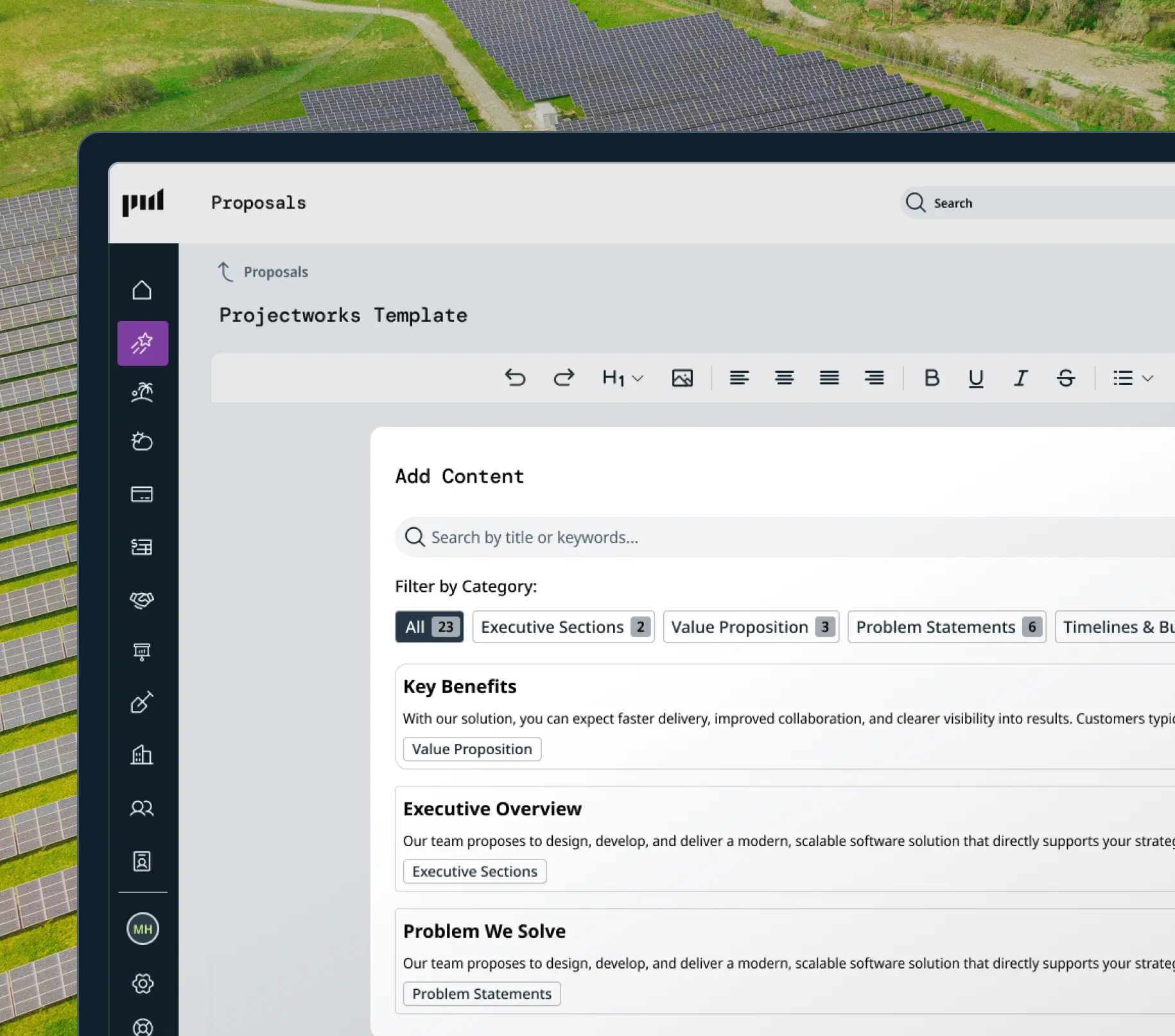
Reusable content blocks, built into Projectworks proposals
Save your best proposals as templates and reuse proven content blocks on every bid.
What to personalize in a proposal
Personalization belongs wherever the client is checking whether you listened. That means the problem described in their words rather than yours, the outcomes they will be held accountable for, the scope boundaries and assumptions that protect both sides, the named team who will actually turn up, and the reasoning behind the price. None of it comes out of a content library, and all of it gets easier when the firm has already written down what it knows about the client.
Most of your proposals go to clients you already know
Professional services, which includes consulting, keeps 84% of its clients, tied with media for the highest retention rate of any industry in a 2018 CustomerGauge survey published by Statista. Our research supports this, finding that three in five firms send more than half of their proposals to existing or repeat clients.
Proposals for existing clients should be the cheapest ones a firm writes, because the research is already done. In practice the knowledge sits with whoever ran the last project, so a partner rebuilds the client's priorities from memory a week before the deadline, and anything that person forgot or never knew drops out of the proposal.
Getting this right pays off beyond the bid. Beaton Research + Consulting found that clients who rate their experience as excellent are 3.4 times more likely than those who rate it poor to consider the same firm for additional services, and its research names understanding the client's business as one of the biggest drivers of which firm a client picks. A proposal that already shows that understanding is part of the experience, and it makes the next piece of work more likely.
How to personalize proposals at scale with a client cheat sheet
The method is easy to describe and takes discipline to keep up. Pick three to five key accounts and one or two "whales" you'd like to land, keep one cheat sheet per client, update it between proposals rather than during them, and start every proposal for that client from the sheet. The checklist below is adapted from the How To Win More Work ebook and shows how to fill each one in.
Then write it down. Everything you've gathered goes into one cheat sheet per client, kept where your proposals get built, and the next proposal for that client starts there instead of from someone's memory. KPMG names personalization and empathy among its Six Pillars of client experience, and reports that firms excelling across all six can achieve 75% better profitability.
The full ebook holds the rest of the to-do lists and the Proposal Maturity Model scorecard.
Ebook
How To Win More Work
Get the rest of the to-do lists and the Proposal Maturity Model scorecard.
Build a scalable proposal process around it
Where the cheat sheet should live
A cheat sheet only scales if the next writer can find it. When it sits in a partner's inbox or a personal notes app, the firm is back to depending on one person, so it belongs on the client and deal record where proposals get built. Pricing should come from the deal budget on that same record, which means the number in the proposal is the number the project inherits once the work is won. That is what lets you automate proposal creation from CRM data instead of retyping it.
The last piece is feeding results back. After every win or loss, add what you learned to the client's sheet, including what landed, what the client pushed back on and which pricing held. The sheets improve as a side effect of normal work, which is what Level 4, "Firm-wide asset", looks like in the Proposal Maturity Model. At that level the firm's knowledge compounds instead of leaving with whoever wrote the last bid.
How to measure proposal process efficiency
Three numbers will tell you whether any of this is working:
Track hours per proposal against the 24-hour average and the senior share of proposal time against the 47% benchmark. Then split your win rate between existing and new clients, and compare each half against the 47% average win rate across professional services.
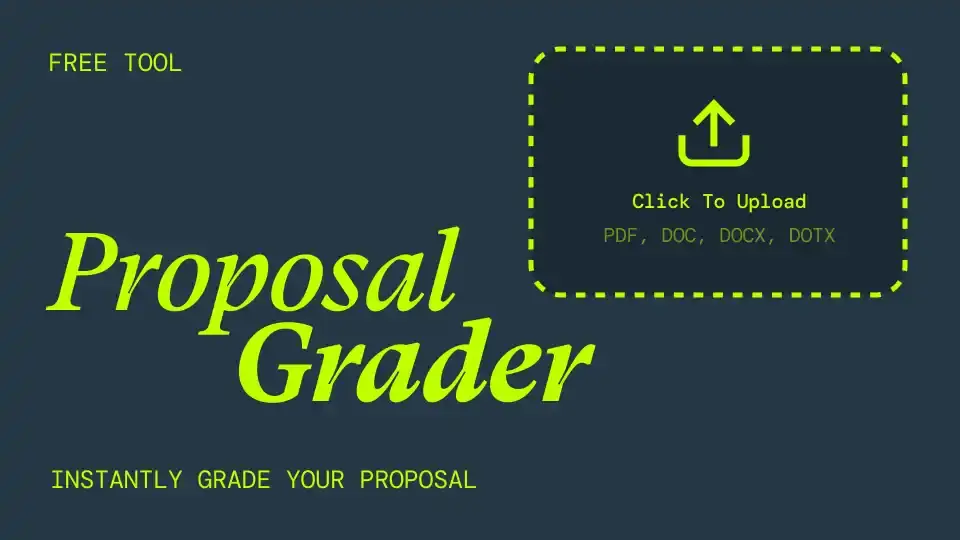
Proposal Grader
Upload your proposal and grade it
See how your draft ranks against winning submissions before it goes to the client.
Grade your proposalIf the cheat sheets are doing their job, hours and senior share should fall while the existing-client win rate climbs.
When personalizing a proposal isn't worth it
Proposal process efficiency also depends on knowing which bids don't deserve the full treatment. A low-fit RFP you're answering to stay visible, a price-led tender where the cheapest compliant bid wins, and a small renewal for a client who already knows you all call for a lighter touch. Use the standard blocks, get the price right and add a short note that shows you know who you're writing to. Personalizing them in depth spends margin on work you probably won't win, or would have won anyway.
The teams that win most often are choosy about this. Teams winning more than half their RFPs use a go/no-go process to decide which RFPs to answer. The call itself can be quick if you decide how much effort a proposal deserves before anyone opens a template.
Make every proposal easier to write than the last
Firms that get proposal process efficiency right stop treating each proposal as a fresh piece of work. Every bid adds a little to what the firm knows about a client, so the next writer starts further ahead than the last one did, whoever that writer is. Start with one key account this month and fill in its cheat sheet before the next proposal is due, then see how much of the work is already done. For the full playbook, download the How To Win More Work ebook.

Read similar resources from Projectworks
We ranked the best proposal software for consulting firms in 2027 on two things: the editor, and whether the price becomes the project budget.

Dominique here, Chief Customer Officer at Projectworks. I'm really excited to be kicking off a brand new live series called Projectworks Sessions. Session #01 is all about Proposals and CRM: how to manage your pipeline, send proposals and hand won work over to delivery without leaving Projectworks. We’d love you to join us live. RSVP to save your spot.
Projectworks has been named to the 2026 Inc. 5000, the annual ranking of fastest-growing private companies in the United States, for the second time. Building a global software business is not an easy thing to do. So when our growth shows up on a stage as competitive as the US market, it means a lot.