Your Best Proposal Content? It's Hiding
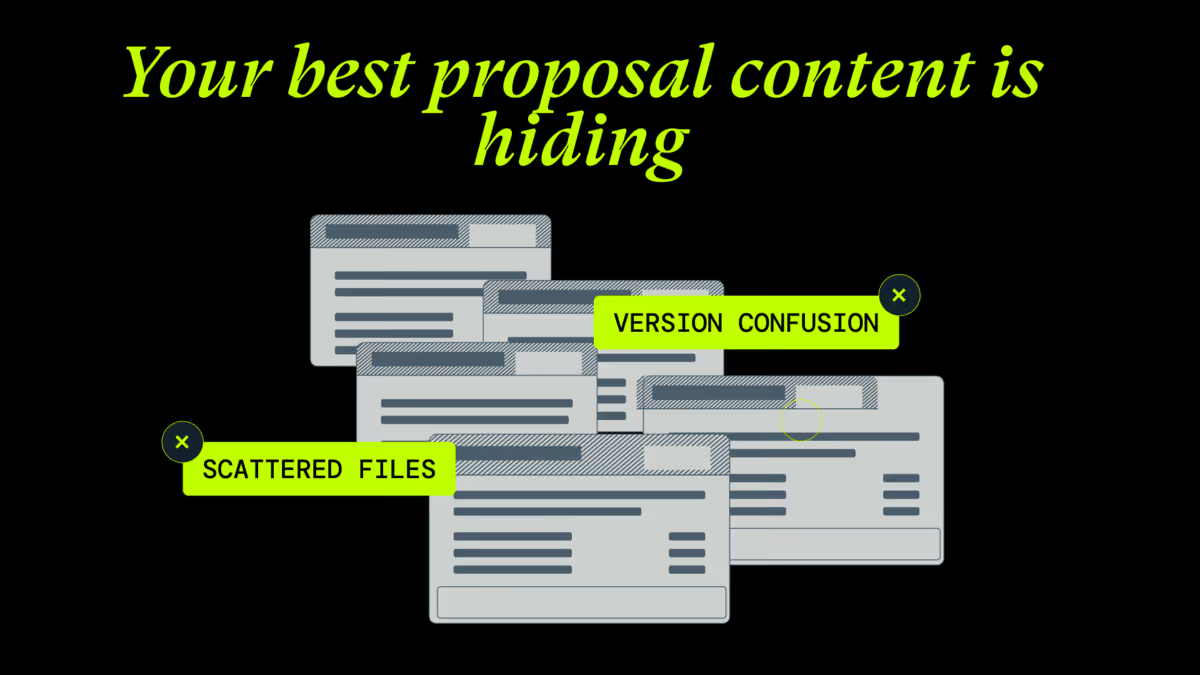



Most professional services firms have more good content than they realise. The problem isn't that it doesn't exist, it’s that it lives in different, unconnected places and no one has full visibility over it. When a new RFP lands, you feel the pain immediately. Someone opens the last similar proposal and starts copying from it. Someone else messages a colleague for the right case study. By the time the first draft is circulating, the team has spent their most focused hours on logistics that should have been solved before the bid started.
Content scatter matters more than firms think
In research Projectworks conducted with professional services experts, content generation was the single most common thing people wanted to improve about their proposal process, cited by 45.6% of respondents, ahead of pricing, design, and strategy. That is, the ability to quickly find and use the content they knew they already had.
This points to something worth naming: Retrieval is a significant driver of proposal inefficiency, not necessarily writing itself. Firms spend hours either looking for or recreating content that already exists.
When firms report spending an average of 24 hours per proposal, the time cost is meaningful. Some of that goes to content retrieval, searching, requesting, copying, checking, all work that shouldn't be needed.
So where is your best content hiding?
Sent folders. Your most effective executive summary might be sitting in someone's outbox . It won that project but no one saved it anywhere accessible. When a similar brief comes up, someone searches their own inbox under deadline pressure or rewrites something from scratch that was already done well.
The SharePoint folder no one is actively maintaining. There usually is a central location. But the CVs are from two years ago, the case studies reference a client you no longer work with, and three people have slightly different versions of the company overview stored in slightly different folders. A content library no one owns is just an unmaintained filing cabinet.
HR's server. Staff CVs and capability profiles are stored with HR, which means proposal leads have to request them, wait for them, and then manually check whether they're current. You shouldn't be chasing anyone, that information should be one search away.
The previous proposal. Many firms start each new bid by finding the last similar proposal and copying from that. It means you run the risk of a minor error or an outdated pricing model getting carried forward from bid to bid. Reusing past proposals makes sense, but treating them as the source of truth is risky.
Someone's head. The most experienced person on your team knows which case study fits this brief, which proof point lands with this client type, and how to frame your methodology for this sector. That knowledge isn't written down anywhere. When they're unavailable during an active bid, everyone else feels it.
What mature proposal governance looks like
Firms that win consistently haven't necessarily hired better writers or built more elaborate templates. What they've built is both process and governance that lets them find, verify, and reuse the content they already have.
A few markers of proposal content maturity:
Content has a single home. A maintained library with clear ownership, consistent naming, and regular reviews. The question "where is our infrastructure case study?" has one answer, and everyone knows it.
Content is searchable and tagged. Not just filed, but organized in a way that makes retrieval fast. When a bid comes in for a financial services engagement requiring staff with cloud architecture experience and SOC 2 compliance history, a mature firm can surface the relevant proof points in minutes rather than hours.
Reusable content is kept current. There's a review process or cycle in place. CVs reflect what people are working on now, not two years ago. Case studies reference projects that have been completed recently enough to be meaningful.
Content ownership is clear. The firm has decided who is responsible for keeping the library accurate, who has access to what, and what the process is for adding new material.
The connection to winning work
There's a direct line between how well a firm manages its content and how well it performs in competitive bids. A centralized, maintained content library doesn't just save time, it raises the quality standard on every proposal that goes out.
When your team can quickly find the most relevant case study, the most current CV, the strongest articulation of your methodology, they spend their time tailoring and sharpening rather than searching and recreating. The proposals that result are more consistent, more relevant, and more likely to reflect the actual quality of your firm.
The firms that treat proposal content as a maintained asset, rather than something to be assembled fresh each time, are the ones building proposal capability as a firm-wide asset. Building that capability is an organizational discipline, the technology and tools make it easier to sustain and support your people with.
A home for your winning content is essential
Projectworks is building a proposals tool that will enable you to generate tailored drafts built around your firm's previous work, voice, and client context. This will include a Content Library, a single repository where content used in your proposals and strategic responses can be stored, reviewed by subject matter experts, tagged, searched and maintained as your firm’s source of truth for responding to buyers.
We want to get your firm to the place where nothing gets missed, your bid stays on brief, and your team starts focusing on the strategy that actually wins work. Join the waitlist for our Proposals tool today.

Read similar resources from Projectworks

Let’s say a consulting firm signs a $30,000 engagement in July and invoices the full fee upfront. The client pays quickly and the cash lands, but the work runs from July through September. By the end of July the firm has completed about one-third of the engagement - the project’s on track but the finance team have some work to do to match revenue with the costs incurred (the “matching principle” of having costs and revenue in the same period is a key accounting concept). Only a third of the project’s fee has been earned (because only a third of the work has been done), and the remaining $20k of revenue is deferred to a future period.
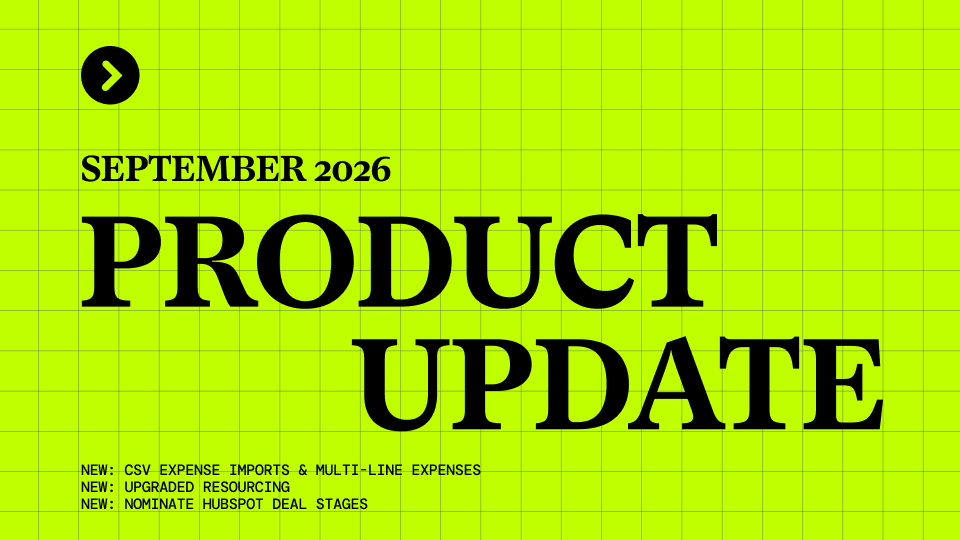
It's the end of September and expenses got a lot of love this month, with a couple of big changes you can start using today and more on the way! We've also made updates across financial reporting, resourcing, HubSpot, and invoicing, dive in to see what's new.
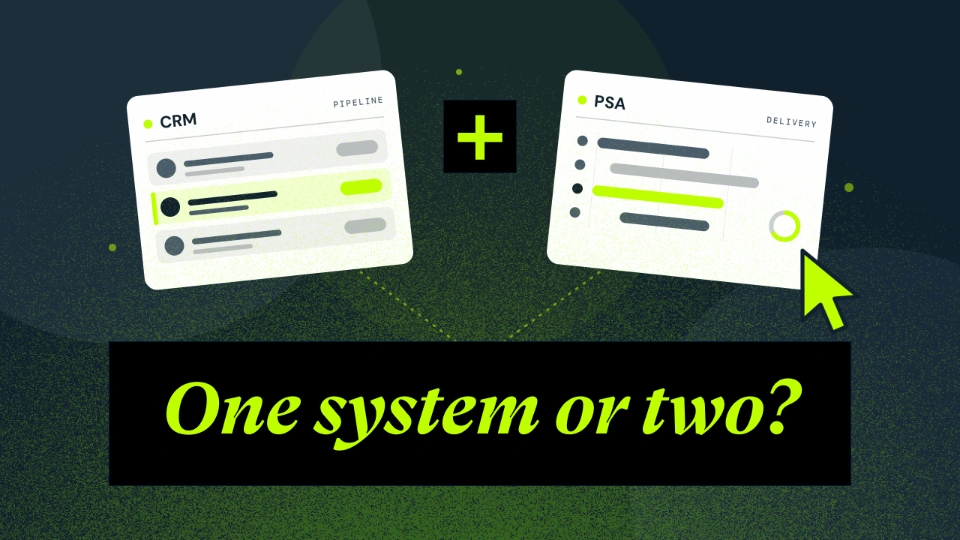
PSA software with built-in CRM, or a separate CRM? For consulting firms, one system usually wins. Here's why.