

The shape of consulting demand has changed. More projects, smaller budgets, same BD team. AI can help at every stage of the cycle. But not every stage equally, and not in the ways most people think.
Consulting firms signed 266% more projects in 2025 than they did in 2023. Sounds like a boom. But the average project budget dropped 56% over the same period. Firms are running harder to hold the same revenue line, and the Business Development teams writing all those proposals haven't grown to match.
That squeeze changes the BD equation. It's no longer about whether your firm can write a good proposal. It's about how many good proposals your team can produce, how fast they can qualify the ones worth chasing, and whether the work you win actually leads to more work after delivery. AI has something to offer at every stage of that cycle.
Here's where AI fits in consulting business development right now, from first contact to repeat client.
Targeting: Using AI to Know Which Work to Chase
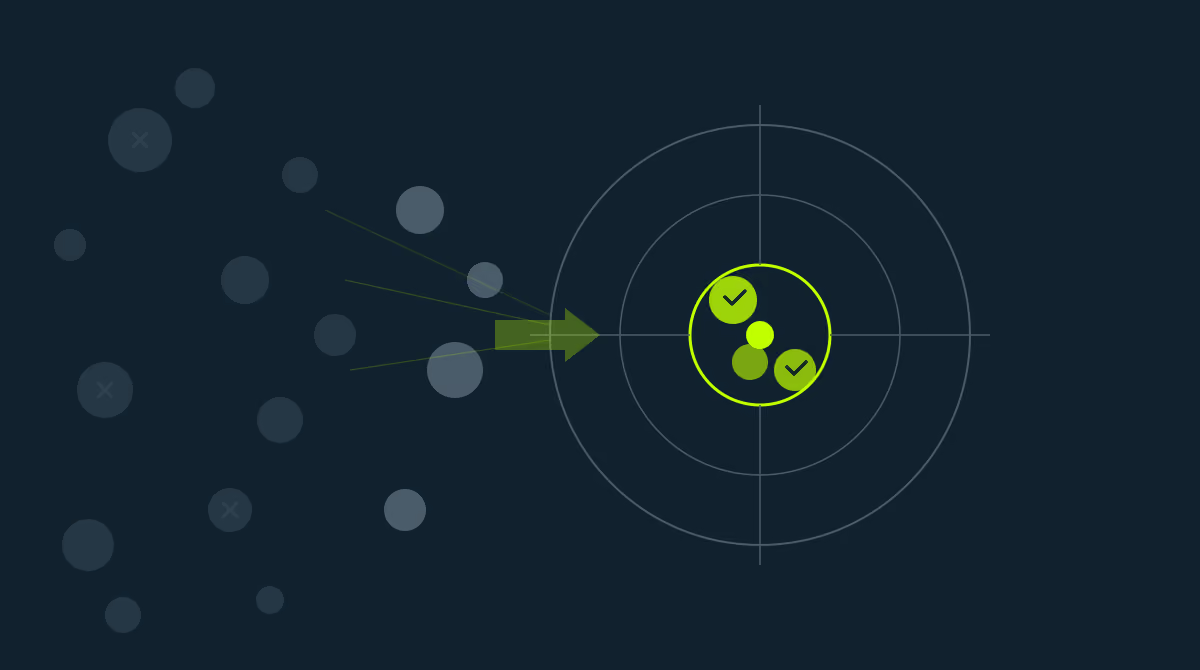
The most expensive proposal is the one you shouldn't have written.
Teams that win more than 50% of their RFP submissions share one trait. According to Loopio's State of RFPs 2025 report, roughly 86% of them use a formal go/no-go selection process. They don't respond to everything. They qualify hard and spend their effort where the odds are best.
AI helps here in two ways. First, it can score incoming opportunities against your firm's historical win data. Which industries have you closed in before? Which deal sizes? Which types of buyers? If your CRM and project data are connected, the pattern recognition is fast and surprisingly useful. Second, AI compresses prospect research.
Proposals: Where Most Firms Waste Their Best People
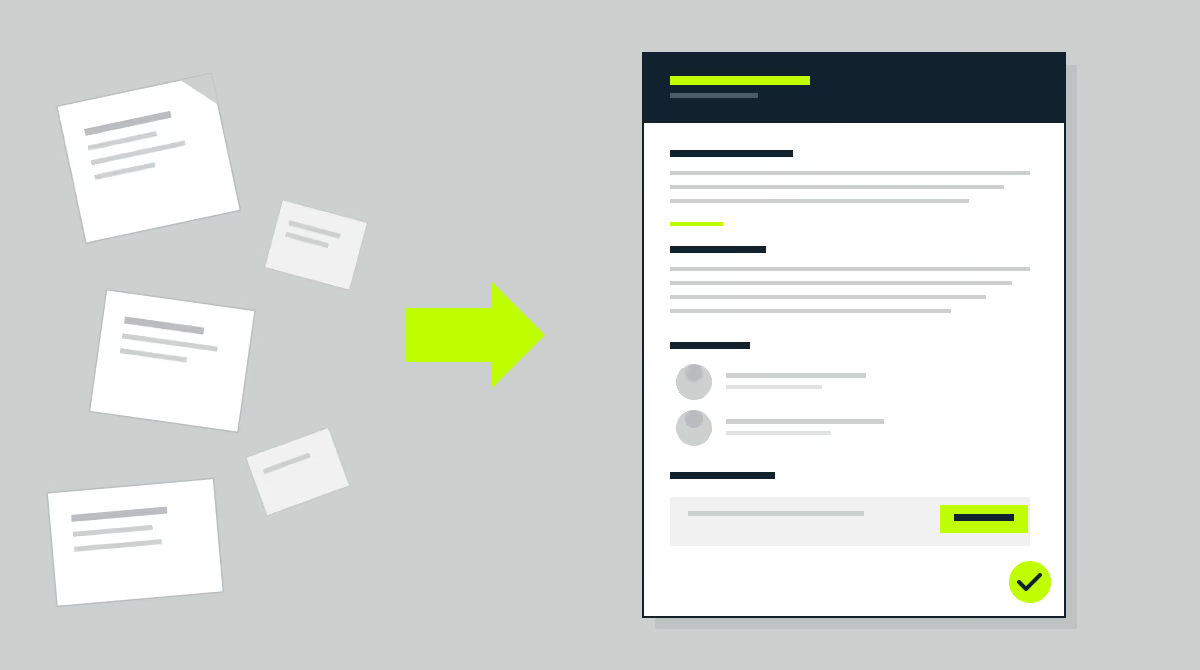
This is the stage where AI makes the biggest difference, and where most firms have the most to gain.
Professional services firms submit an average of 91 proposals per year and spend roughly 24 hours on each. That is more than 2,000 hours a year. A full-time person, and then some, just on proposals. And 40% of firms have senior staff contributing more than 60% of that development time. Partners and directors drafting methodology sections instead of being in front of clients, closing deals, or doing billable work.
Every proposal starts from scratch
Case studies live on someone's laptop. Team bios are on the website but not in a format anyone can drop into a document. Methodology descriptions exist in twelve different versions across last year's proposals. When we surveyed 68 professional services experts, only 14.7% cited reuse as a priority in their proposal process. Content generation topped the list at 45.6%, followed by data integration at 41.2%. These firms don't have a content problem. They have a retrieval problem.
The wrong people are doing the writing
When senior staff contribute 11 hours per proposal on average, and the firm submits 91 proposals a year, that's over 1,000 hours of partner time buried in document assembly. Those hours should go to positioning, client conversations, and the parts of a proposal that actually win the work.
AI changes this by handling the parts that don't need human judgment. The assembly work. Pulling together a first draft from your firm's existing content instead of starting from a blank document. Checking an RFP against its own requirements so nothing gets missed in the response. Matching team members to bids based on skills and availability instead of whoever the partner thought of first. Keeping tone and structure consistent across proposals, even when different people are writing them. None of this is strategic work. It's logistics. And it's where most of the 24 hours per proposal actually goes.
What AI doesn't do is the work that wins. Professional services experts focus 65-75% of their attention on three proposal sections: executive summary, scope and deliverables, and pricing and investment. These are the sections that require reading the client, shaping the narrative, and pricing the engagement to win while protecting margin. AI can give you a starting point. The positioning is yours.
Here's a useful self-check.
Most firms sit at Level 1 or 2. AI will amplify whatever system you have, including the mess. If you're at Level 1 and add AI, you'll generate first drafts faster but still burn hours hunting for the right case study. Getting to Level 3 first, or simultaneously, is what makes AI worth the investment.
Pricing and Scoping: The Section That Wins or Loses the Bid
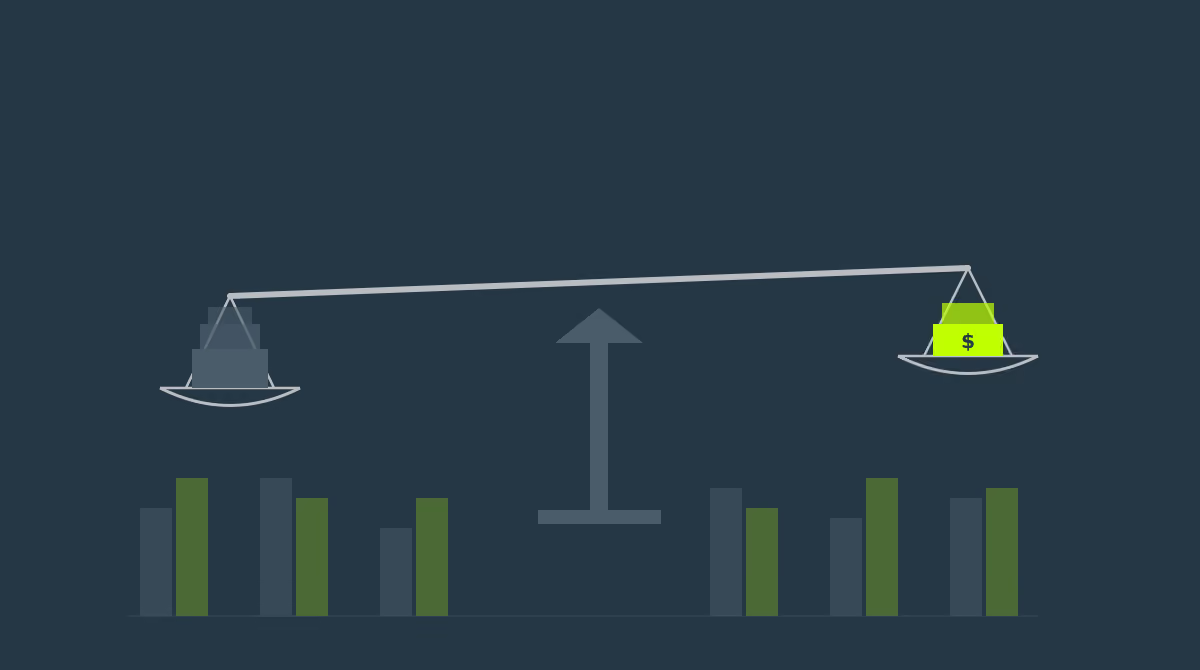
AI speeds up proposal assembly. The temptation is to use that speed for volume. Respond to more bids, faster. But the smarter move is to reinvest that time into the section most likely to determine whether you win. Pricing.
When your proposal tool is connected to delivery data (actual hours vs. estimates, margin outcomes by project type, historical scope accuracy), pricing stops being a negotiation in the dark. You can model scenarios based on what similar projects have actually cost to deliver. You can spot where past proposals underquoted and where they left margin on the table.
The judgment still belongs to a human. What the client values, where competitors will price, how much risk to absorb. But AI can put real data underneath that judgment instead of instinct and a spreadsheet from two quarters ago.
Client Experience: Winning the Work After the Work
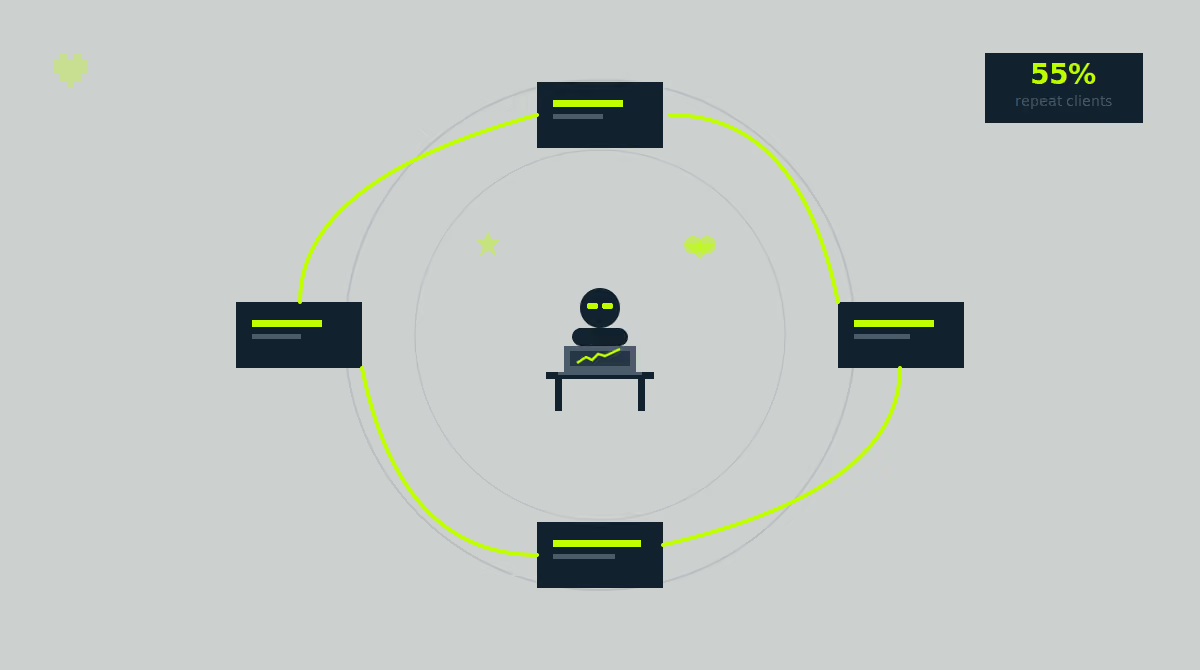
Over half of proposals are for existing clients or repeat work. For most consulting firms, the biggest BD lever isn't finding new logos. It's keeping the ones you have coming back.
The data on this is stark. When client experience is excellent, 93% of professional services clients will buy additional services. When it's poor, that drops to 27%. The proposal for a returning client should reference what you delivered last time, the outcomes you hit, the relationship context that matters. It should not start cold. AI can surface that history (engagement data, project outcomes, upsell signals) before the BD conversation begins, so your team walks in with context instead of building it from scratch.
The 5 Ways To Win More Work framework applies here. Differentiation, client empathy, and credibility matter just as much in renewals as they do in new pitches. Maybe more. An existing client already knows what generic looks like from your firm. They'll notice if the next proposal feels phoned in.
Build an AI-Ready Business Development Engine That Compounds
The firms winning more work aren't the ones writing the most proposals. They're the ones targeting better, proposing smarter, pricing with real data, and keeping clients coming back. Each stage feeds the next.
The average win rate across professional services is 47%. That means more than half of all the hours firms invest in proposals end in a loss. Improving that number by even a few points changes the economics of your entire business development operation.
One last test. Pull up the last five proposals your firm sent. Swap your firm's name for a competitor's. If nobody would notice the difference, the problem isn't speed. It's differentiation. AI helps with both, but only if you know which one you're solving.

Read similar resources from Projectworks
Learn what client lifetime value (CLV/LTV) means, how to calculate it, and why it matters for consulting and professional services firms.

Winning new clients is expensive. Growing the ones you have isn't. Here are 7 AI workflows for growing client lifetime value (or LTV) that you can start putting to use immediately.
Harvest changed how it charges for the platform. Your price depends on how your firm actually uses it, not just how many seats you buy. There's no single figure we can give you here, so we built a calculator that gives you yours instead. Put your team size and usage in below and see the real cost. Then keep reading for what changed, and what we think you should do about it.