How to Write a Winning Consulting Proposal: The 2026 Strategy for AEC Firms



AEC firms win around half of the bids they submit, according to the Inspire Report. Competing in this environment is tough. You need to pitch more often just to maintain the same pipeline, and those pitches need to be sharper than ever.
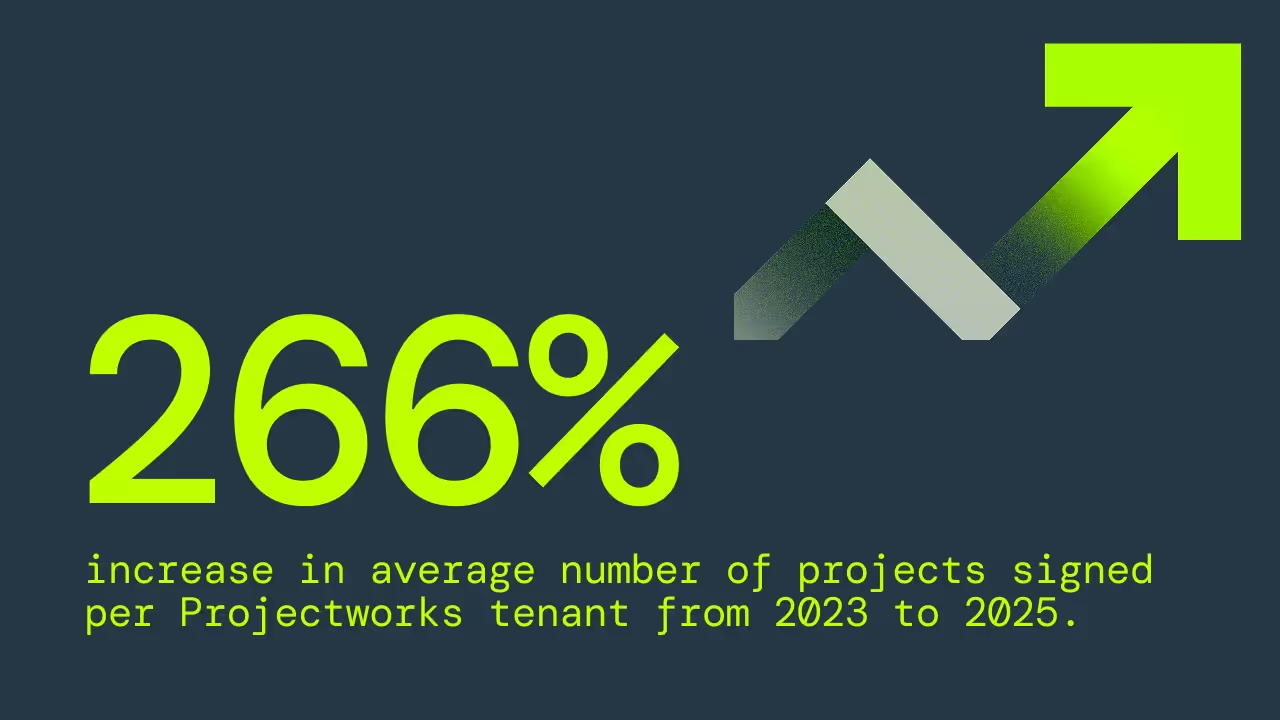
We see the same pattern in our own data. Consultants are securing a higher volume of projects, like a 266% increase in average number of projects signed per Projectworks tenant from 2023 to 2025.
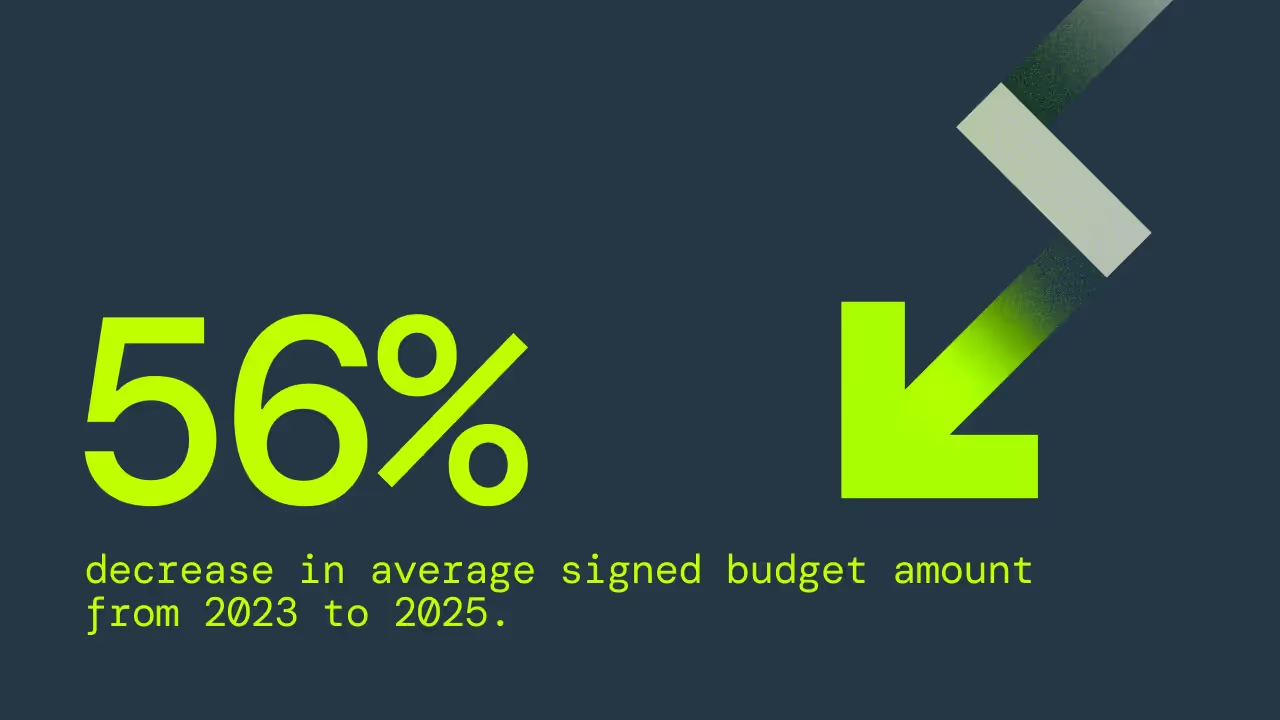
At the same time, there is a 56% decrease in the average signed budget amount.
The outcome is simple: You need to win more work, more consistently.
That means your consulting proposals must strike the perfect balance between speed and quality. Whether you are writing a proposal for a brand new prospect or trying to secure repeat work, the way you present your value has a direct impact on your win rate.
Based on feedback from our community, it’s clear that many consulting firms struggle with slow turnaround times, inconsistent messaging, disconnected budgeting tools, and the pressure to tailor every proposal to unique client requirements. These challenges add strain to already busy teams.
This guide shows you how to write a consulting proposal that stands out - and is more likely to win. You can also benchmark the strength of your proposals with our new Proposal Grader, an AI-powered assessment tool that scores your pitch and highlights opportunities for improvement.
How to Write a Consulting Proposal
Writing a high-quality consulting proposal becomes easier when you follow a clear structure, tailor your content to your client, and focus on persuasion. Below are the core elements every strong proposal includes.
Use the Correct Consultancy Proposal Format
A simple layout helps clients understand your value quickly. In our experience, most professional consulting proposals follow a structure like this:
- Executive Summary
- Problem / Context
- Proposed Approach
- Deliverables & Scope
- Pricing & Investment
- Timeline & Milestones
- Team & Credentials
- Assumptions / Exclusions
- Contract Terms
- Next Steps
Based on our internal research, professional services experts focus most of their attention (65-75%) on developing the following sections:
- Pricing & Investment - clarity of cost, options, payment logic
- Scope & Deliverables - exactly what’s included vs. missing
- Executive Summary - value clarity & decision-maker endorsement
Other important factors (with 20-30% of attention devoted to them) include:
- Team capability & relevant credentials
- Phases, timeline & feasibility
Terms, exclusions, legal conditions are less of a focus at the proposal stage, and become more heavily reviewed once shortlisting occurs.
Each section of your proposal should help your prospective client understand what you will do, why it matters, and why your team is the right choice.
Many consulting firms lack a central repository of content for their consulting proposals, which makes this step far slower than it needs to be. To improve efficiency, keep your content building blocks in one place. Updated resumes, proof points, and case study summaries should be stored centrally so your team can access the correct assets every time - without wasting hours digging through Sharepoint, emails, or their desktop.

Tailor Your Proposal to the Client
Clients should recognize themselves in your proposal, so make it obvious that you have deeply considered their needs and offer proof points that are relevant to their problem space. Ask yourself:
- What outcomes does this client care about most?
- How will we measure those outcomes?
- In what previous projects have I successfully driven similar outcomes, and do I have proof?
- Who in my team is best suited for this project?
- Does our mission align with the client’s? Can we build rapport through values, alongside our ability to meet their logistical needs?
Include Proof Points that Matter to Your Client
Your proposal must include strong evidence through case studies, metrics, and testimonials that validate your team's expertise.
Clients want to see signs that you can deliver. Strong proposals include clear proof points such as:
- Case studies with measurable outcomes
- Testimonials from relevant clients
- Metrics that show the impact of your work
- Industry recognition
Choose proof that is directly relevant to the client problem you are solving. Tailored evidence always beats broad claims. This ties back to the need for a central content repository - so you can find the right case studies quickly.
Focus on Persuasion
A consulting proposal is a sales asset. Every section should help the client move closer to yes. As NTT DATA Chief Growth Officer, Aaron Millstone, said of winning a recent $1.5B deal:
“Confidence is contagious. Losing is also contagious. If you have to pick one of those two things, pick winning. Be strong with your confidence both internally and externally.”
Highlight outcomes, not only actions. Show why your approach is the best path to reach their goals.
Further reading: How Small to Mid-Sized Consulting Firms Win Bigger Deals - Without Being A Global Giant
Don’t Forget to Pitch to Existing Clients
Quality proposals strengthen client relationships by showing respect and understanding. Good client relationships are crucial in a consulting landscape where it can cost anywhere between 5-25X more to acquire a new client rather than retain an existing one.
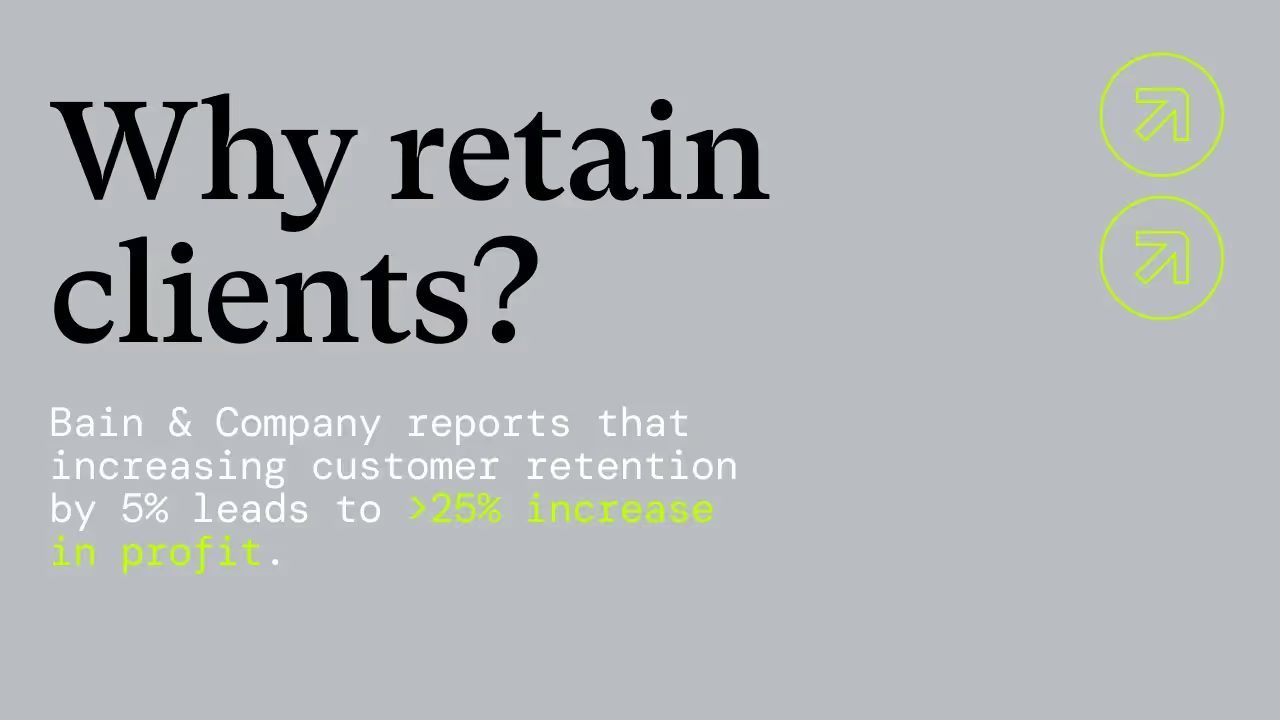
Bain & Company reports that even increasing customer retention by 5% leads to more than 25% increase in profit. Thus, if you’ve worked with these clients before, it’s in your best interests to make sure to refer to past collaboration when relevant and maintain consistent messaging.
Retain Your Firm’s Brand Voice
For your proposal to be professional easy to digest, you need to keep your brand voice consistent.
Draw up a brand guidelines document, including rules for tone of voice. Make sure that team members are aware of this guide and tailor their contributions accordingly.
Consider Your Proposal Pricing Strategy
Pricing is a key consideration for most clients, especially if you’re seeing more lower-value projects pop up in the market.
However, if you’re like most consulting firms we see, you might be pricing based on gut feel. That has a number of disadvantages - including being overly reliant on a single expert close to the project, and, importantly, leaving money on the table. Many consulting firms struggle with inconsistent pricing and would benefit from historical data guidance.
Ultimately, clients want to pay for outcomes, not hours logged. So, you could choose from one or more of these models:
- Performance-based or success fees.
- Fixed fees tied to clear milestones.
- Retainers for ongoing advisory access.
- Productized services with transparent scope and price.
You can learn more about accurate pricing for consulting using these resources:
- I Raised My Firm’s Prices The Slow Way. Here’s How PSA Software Would Have Made It Faster.
- 5 Pricing Questions Every Consulting Leader Should Ask in 2026
Once you’ve decided on your pricing approach, make sure to communicate it clearly to the client. Transparency builds trust and reduces friction when it is time for approval.
Common Consulting Proposal Mistakes to Avoid
Strong proposals are not just well-written. They avoid common pitfalls that reduce clarity and credibility. Watch out for the following issues:
Writing From Your Perspective Rather Than the Client’s
Clients care about their challenges first. Make sure their goals are the hero of the proposal.
Using Vague Scope Descriptions
Missing details or vague scope descriptions can lead to scope creep later on - and failed projects. Be specific about what your firm is committing to.
Presenting Too Much Information
Proposals that overwhelm readers lose impact. Focus on the details that matter to the decision.
Leaving Out Assumptions
Assumptions help prevent misalignment. Stating them upfront protects both parties.
Relying on Outdated Templates
Old proposals often contain inconsistent formatting and stale proof points. Refresh your content regularly.
Ignoring the RFP Requirements
It sounds obvious - but, before sending your proposal, run a quick sanity check and confirm it fits the requirements outlined in the RFP. Missing mandatory sections or misaligned deliverables can disqualify your proposal immediately.
Looking for a Proposal Template for Consulting Services?
You’ve been in the consulting game for a while. No doubt, you’ll have a few old proposals lying around - buried on your desktop or in an old Sharepoint. And you’re probably facing many of the same proposal challenges plaguing the consulting industry as a whole:
- Difficulty maintaining consistency across writers
- Challenges pricing work accurately
- The manual effort required to build estimates
- The disconnect between RFPs and internal tools
- The lack of centralized bios, case studies, templates, or boilerplate
- The need for team visibility and version control
Why not get a benchmark for how well you’re doing? If you want to start from a strong foundation, our new proposal grader tool ingests your proposal and recommends how it can be improved.
Try the Proposal Grader
Upload a proposal and receive a clear score in seconds. The grader highlights strengths and weaknesses across structure, clarity, client relevance, and persuasive power.
Your proposal is compared against our internal dataset of global consulting firms, giving you a realistic benchmark for where you stand in the market.
You can’t fix a problem you don’t understand. Get your proposal grade today.
Interested in automating your proposal process for faster turnaround, better RFP alignment, and more consistent messaging? Join the waitlist for our upcoming Proposals tool, and get ready to win more work.

Read similar resources from Projectworks
.png)
This is your guide to all the updates across Projectworks in the month of August. There's new and updated integrations, upgraded resourcing and the opportunity to join early access to Kea, our AI Agent - something for everyone!
It's the end of September and expenses got a lot of love this month, with a couple of big changes you can start using today and more on the way! We've also made updates across financial reporting, resourcing, HubSpot, and invoicing, dive in to see what's new.
Most CRM features are built for sales teams that consulting firms don't have. See which CRM features consulting firms actually need, and which ones they’re paying for and never use.