The Decision Tree That Tells You How Much Proposal Effort Is Enough



Problem: “I want my team’s proposals to look polished enough to win bigger clients, but we can't decide when or if design and detailed content moves the needle or just adds noise. Every time we sit down to approach one, we get pulled between making it visually compelling, and keeping it clean and direct. Does presentation and robustness really matter, or should the work speak for itself?”
Surveying our community of professional services experts, they report that they spend on average, 24 hours per proposal (for more industry benchmark data, including how many proposals your peers are sending and their win rates see the full survey and analysis).
But, if you asked them individually, “How long do you spend creating proposals?” The most common answer we hear is, “it depends.”
Build a consistent proposal process
Winning firms don’t have a ‘one size fits all’ proposal approach. Rather they adjust the amount of time and effort spent on the design, planning and structure according to different factors about the bid and client. They do however, systematize their approach.
Without a consistent proposal process you risk blowing out your average time per proposal. Stress increases over content, design and slow SMEs, regardless of whether the RFP really demanded it. Meanwhile, you aren’t certain of the return on your investment until you hear if your pitch has been successful.
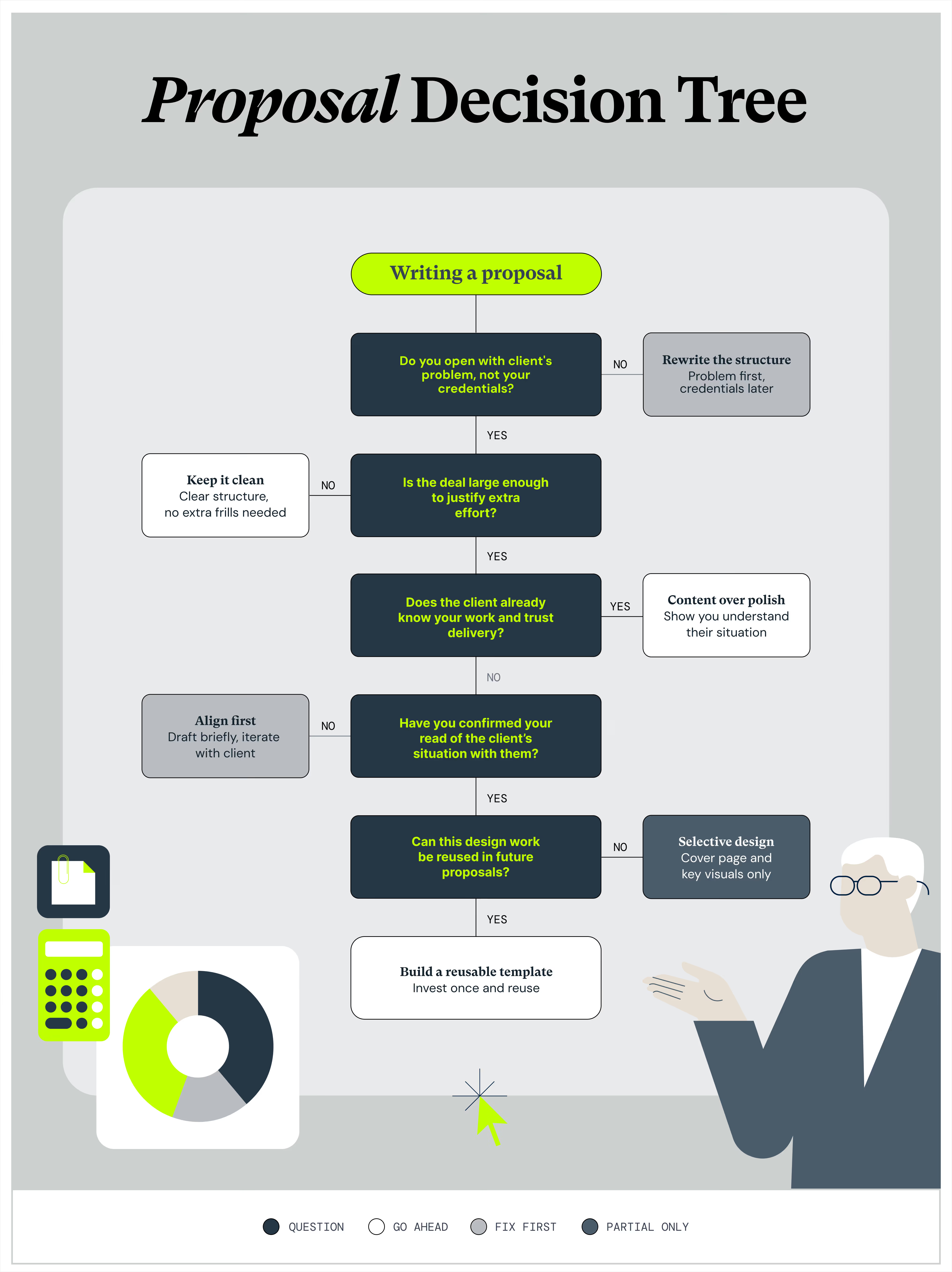
For those yet to systematize their approach, a decision tree can help you quickly size up your approach. Get good at asking these questions to guide your approach:
Lead with the client's problem
In a bad proposal, there’s a lot of content focused on you rather than the client. A good proposal is strategically written to help the buyer decide.
A common mistake is leading with credentials. Company history, philosophy, team bios, a letter from the founder, these aren't bad elements, but belong later in the document. When a buyer opens your proposal, they're asking - do you understand my problem? If the answer isn't obvious within the first page or two, you've lost their attention.
Lead with your understanding of the client's situation and what's at stake. Follow with your proposed solution and approach. Credentials, case studies, and team bios matter as supporting evidence, not an opening argument.
Brevity vs robustness is a strategic choice
Longer proposals can feel safer to write, they signal thoroughness. But from the buyer's side, a long proposal is a high effort to read, making it easy to delay or discard.
The goal is a decision-enabling document. If the buyer can read it quickly, understand what they're getting, and feel confident approving it, that's a win before the work even starts.
However, the size and complexity of the deal can make added robustness worth it. Use the decision tree to gauge whether the deal justifies it.
Design should reduce friction
For many professional services firms (creatives aside), heavy design can slow things down.
Teams reviewing bids aren't admiring layouts alone. A proposal that prioritizes visual polish over navigability creates friction for the very people deciding whether to approve it. They're scanning for scope, timeline, and cost alignment, and often extracting content for use in their own comparison tools.
A clean, consistent structure with light visual hierarchy can outperform something that looks like a brand brochure. Aim to support visual clarity without demanding high-production effort on every proposal, particularly your lightweight proposals.
Don’t overlook templates
The last box in the decision tree is often the most overlooked: building reusable templates and content blocks. Teams often pass over this step, assuming templates can only lead to generic, boring proposals.
Templates don't mean identical proposals. Standard content blocks like a scope section, team bios, or a pricing table can be reused selectively while the client-specific content stays fresh. The result is a repeatable system accessible to everyone contributing to bids across your firm.
Projectworks' upcoming Proposals tool is designed around exactly that, giving teams standard templates to start from and the flexibility to build their own for faster turnaround, better RFP alignment, and more consistent messaging. Join the waitlist for our Proposals tool today.

Read similar resources from Projectworks
Learn how to develop junior consultants through project work in the AI era by building judgment, ownership, feedback, and client-ready skills.

Discover practical ways to keep consultants productive between projects, from training and business development to internal work and project preparation.
.png)
This is your guide to all the updates across Projectworks in the month of August. There's new and updated integrations, upgraded resourcing and the opportunity to join early access to Kea, our AI Agent - something for everyone!