

Statements of work and scopes of work both get shortened to “SOW,” and because the scope usually sits inside the statement, teams end up treating them as one document. This post settles the statement of work vs scope of work question and shows where each one fits, so you know which one you’re signing.
What's the difference between a statement of work and a scope of work?
A scope of work defines the boundary of a project, listing the work that's included and the work that isn't. A statement of work is the signed agreement built around that boundary, which adds the timeline, the people, the price, how deliverables get accepted and how the scope can change.
A statement of work is the document your firm signs for a single engagement, and it's the one everyone reaches for when there's a disagreement about what was promised. A scope of work describes the work itself, and the out-of-scope list inside it often protects your margin more than the deliverables list does.
Why both get abbreviated "SOW"
The two names share their first letter and their last two words, so in conversation both collapse to "SOW." Inside a firm, a bid manager can ask delivery to review the SOW and get comments on the deliverables while nobody looks at the payment schedule. With clients it cuts the other way, because a procurement team may send a document labeled SOW that's really a scope, and the label makes it look finished.
The fix is a naming rule. Reserve "SOW" for the statement of work. Call the boundary "the scope," or "the scope section" once it sits inside a SOW. And when a document arrives with SOW in the file name, check it for a price and an acceptance clause before anyone treats it as agreed.
Where each sits in the contract stack: MSA, SOW, scope, change order
Most consulting relationships run on four layers. The master services agreement sits at the top and gets signed once per client. It holds the standing legal terms of a professional services contract, such as liability, confidentiality and intellectual property, and on its own it authorizes no work at all. Each statement of work sits under the MSA and covers one engagement, pointing to the MSA's terms instead of repeating them. The scope lives inside the SOW, and change orders sit beside it, each one a signed amendment to the scope, price or dates of a SOW that's already in force.
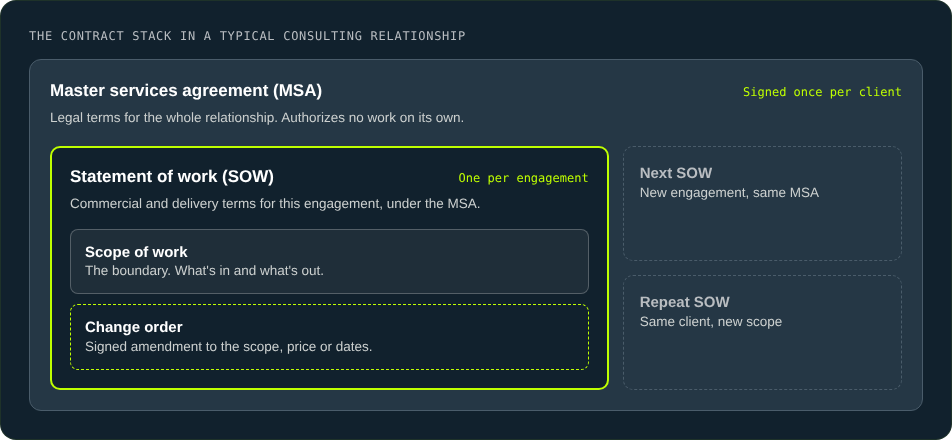
So the difference between a SOW and an MSA is what each one governs. The MSA sets how the two companies treat each other, and the SOW sets what this piece of work is and what it costs. A good MSA also says which document wins when the two conflict, which matters the first time a SOW's payment terms drift from the MSA's defaults.
When most of your work comes from existing clients, the MSA gets negotiated once and fades into the background, while the bid team writes SOW after SOW.
That repetition is where firms get casual, because a familiar client makes a thin SOW feel safe. The MSA's terms carry over to each new engagement, but the last SOW's price, milestones and acceptance tests don't unless the new SOW restates them.
When a scope of work on its own is enough
Some documents never need the commercial wrapper. An internal brief that hands a delivery team the boundary of a job is a scope and nothing more, because there's no client signature to collect. The RFP stage works the same way. The client's scope tells you what to price, the scope in your consulting proposal shows how you'd shape the work, and nobody is committed until a SOW is signed. A small add-on can also run on a scope if the MSA already sets the rates and says how changes get approved, because the signed scope then works as a short authorization against terms already agreed.
Everything else needs the full statement of work, including every new client and any work whose price isn't already settled under an MSA. If accepting a deliverable should release a payment, that link has to be written down, and a scope has nowhere to put it. Writing one is quicker when you build the SOW backwards from delivery, starting from the scope you already have.
The risk of signing a scope and calling it a SOW
A scope signed on its own defines the work but leaves out most of what governs payment and delivery. Nothing in it says when an invoice falls due or what a finished deliverable has to look like, so both are left to the client’s judgment. It also has no process for handling new requests, which is usually how scope creep starts on projects that were well defined at kickoff. Putting the scope inside a statement of work closes those gaps.
Free template
Scope of Work Template for Professional Services (Word + PDF)
An 11-page scope of work template with a task-by-task work breakdown, a RACI matrix and acceptance criteria.
Download the free template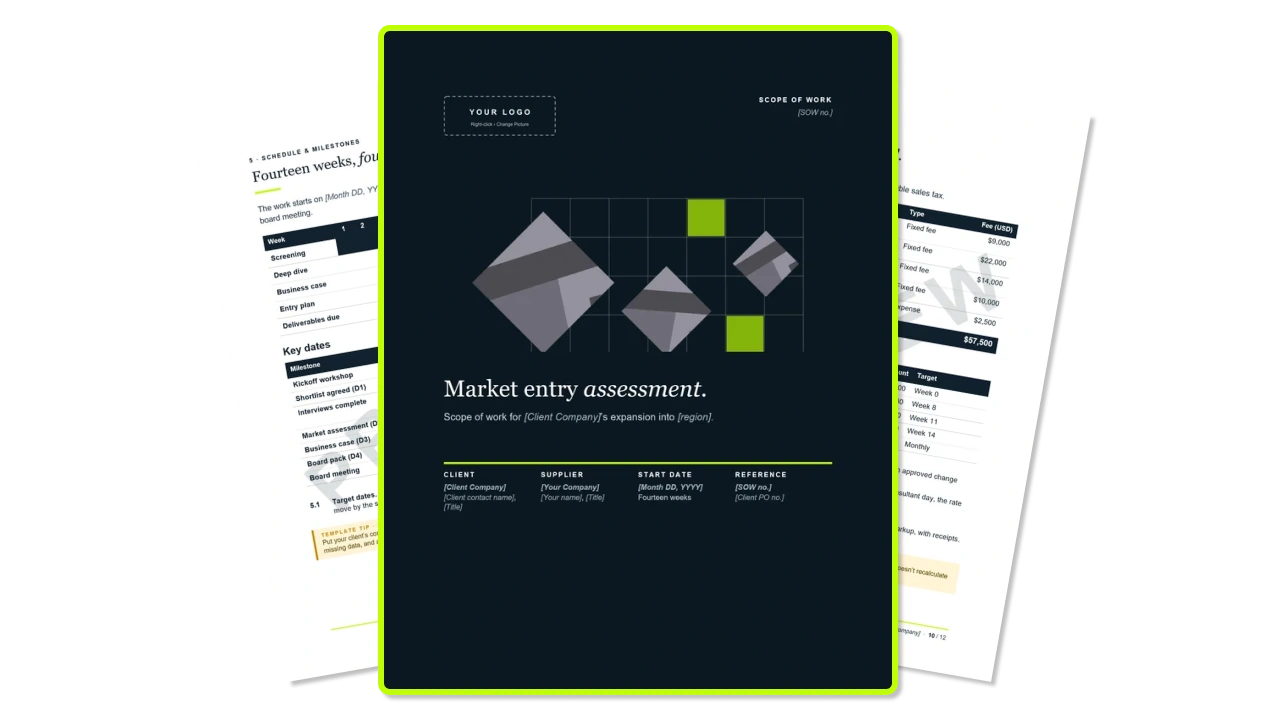

Read similar resources from Projectworks

Thinking of switching from Harvest after the price increase? What to decide first, what data you can export, and how a migration actually works.
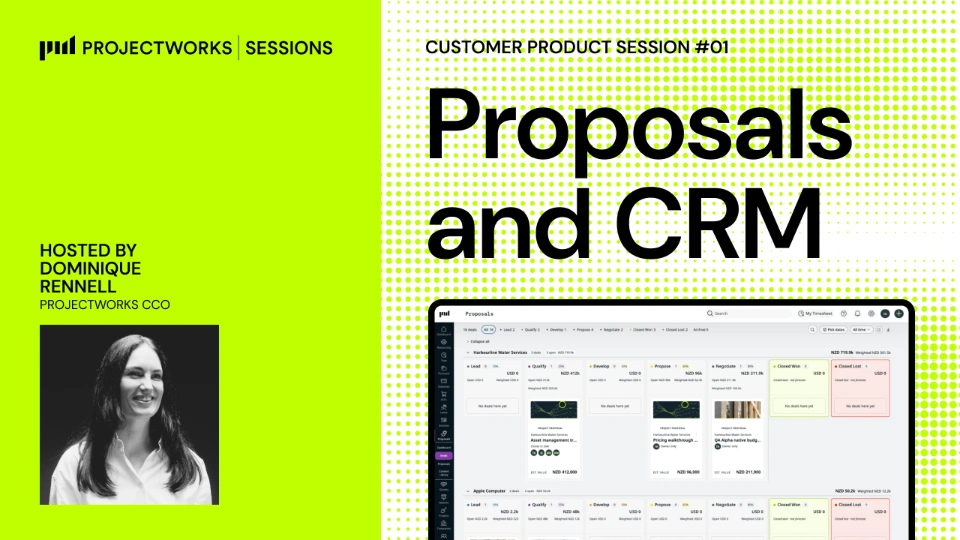
Dominique here, Chief Customer Officer at Projectworks. I'm really excited to be kicking off a brand new live series called Projectworks Sessions. Session #01 is all about Proposals and CRM: how to manage your pipeline, send proposals and hand won work over to delivery without leaving Projectworks. We’d love you to join us live. RSVP to save your spot.

Use Claude, ChatGPT or Copilot at work? Connect them to Projectworks and handle everyday tasks from there. The connection runs on MCP - a common way for AI assistants to link up with other software so they can look things up and make changes.