How Firms Hit $50m: Breaking Through Consulting Firm Growth Walls
Consulting firm growth does not slow down politely. It hits a wall. One month you are humming, the next you are swamped with work but somehow moving slower.
.avif)


In this episode of the Projectworks Podcast, Dominique Rennell and Mark Orttung break down what those “growth walls” look like in reality for consulting firms, and what has to change to keep scaling without burning out the founder or bloating overheads.
Interested in reading the book?
Get your copy of The $50m Consulting Firm here
Insight 1: The First Wall Is Founder Bandwidth
In the early years, the founder being everywhere works. Then it becomes the bottleneck. The business outgrows one person’s time and decision-making capacity, even if that person is doing everything “right”. The move is shifting from founder-led execution to leaders who truly own functions and outcomes.
Insight 2: The Next Wall Is Decision Centralization
This one is sneaky.
You hire smart people. You add leadership. But everyone still routes decisions through the top. Slides get checked. Proposals get reviewed. Client conversations get escalated. The founder is still the centre, just with a larger orbit.
Mark’s lesson here is blunt: breaking through requires decentralizing decision-making so leaders can run parts of the company without daily involvement.
Insight 3: Scale Comes From Leaders Who Can Run a Chunk Of The Business
Mark describes a mental model that many consulting firms will recognise: if one leader can run a meaningful chunk of the business end-to-end, you can replicate that capability and expand capacity without everything funnelling back to the founder.
Dominique’s angle here is important: this is also where roles change. Being a great individual contributor is no longer enough. At scale, leaders must recruit, coach, and replicate performance through a team.
Insight 4: Focus Feels Risky, But It Makes Growth Easier
Another common growth stall is being “a firm that does everything”.
Mark shares how during his time as CEO of Nexient, they shifted from broadly doing anything related to software to a sharper point of view: custom software with great user experience. That clarity made sales easier, delivery cleaner, and the brand more memorable.
They even tested a bold message early: “Life’s too short for crappy software.” It worked because it was specific, human, and easy to repeat.
Dominique calls out the real fear behind focus: you have to say no to revenue. That feels risky when you are hungry to grow. But without focus, you end up with a patchwork firm that is hard to scale.
Insight 5: Incentives Need To Reward Healthy Growth, Not Just Activity
As firms scale, misaligned incentives quietly create margin problems. Mark talks through structuring senior commercial roles so performance ties to both growth and profitability, not just bringing in work at any cost. The point is straightforward: if you want disciplined scale, pay for disciplined outcomes.
Dominique adds that incentives are not just a sales thing. Delivery leadership needs clear commercial outcomes too, otherwise the business grows in revenue while profitability quietly erodes.
If you are feeling a growth wall right now, the value of this conversation is how practical it is. It helps you identify the constraint that is actually slowing you down, whether it is founder bandwidth, centralised decisions, unclear positioning, or incentives that reward the wrong behaviour. Watch the recording above, then if you want to keep building your 2026 playbook with us, RSVP to the next episode with Matt Hayter: The New Rules To Win More Work.
Interested in reading the book?
Get your copy of The $50m Consulting Firm here


Listen to moments from similar podcasts
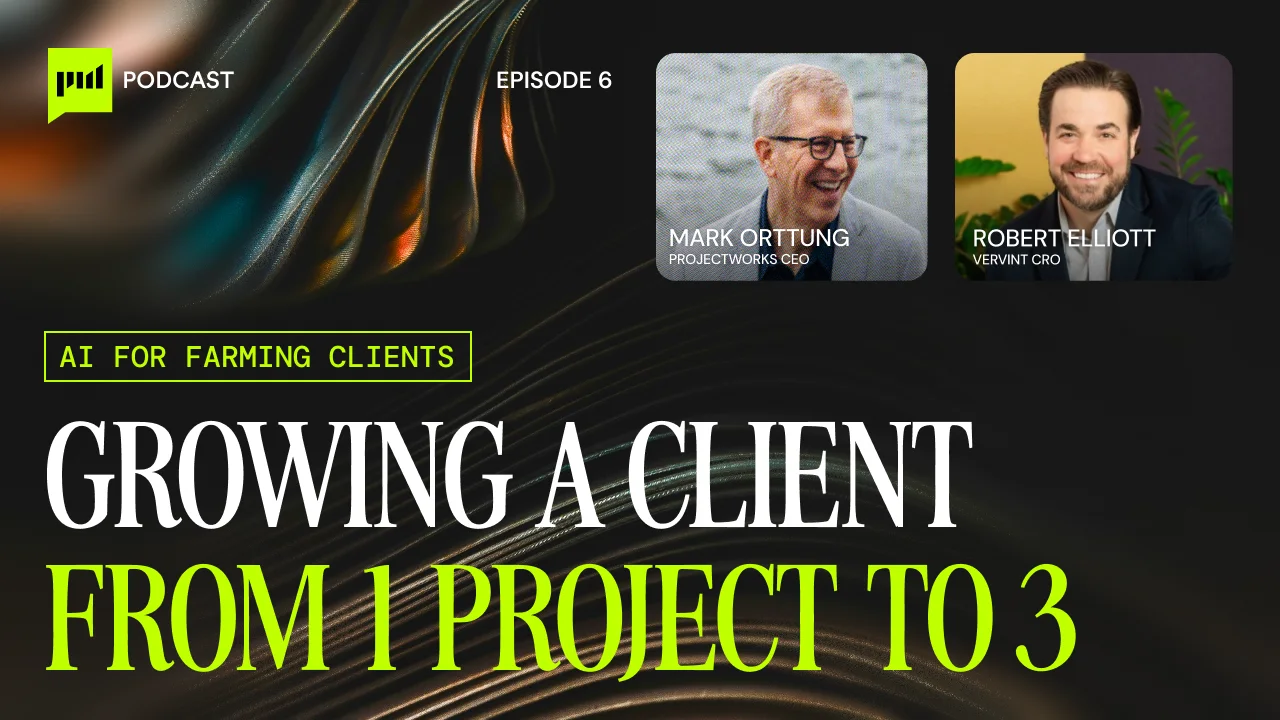
For many consulting firms, the one-project client is the norm and the long-term partnership is the exception, which is backwards given how much cheaper repeat work is to win. This episode is about making that step deliberate rather than accidental. We'll share the play-by-play breakdown of how fast growing firms identify the right client accounts it invest in, how they grow them, who's involved in the relationship, and where AI makes it all easier.
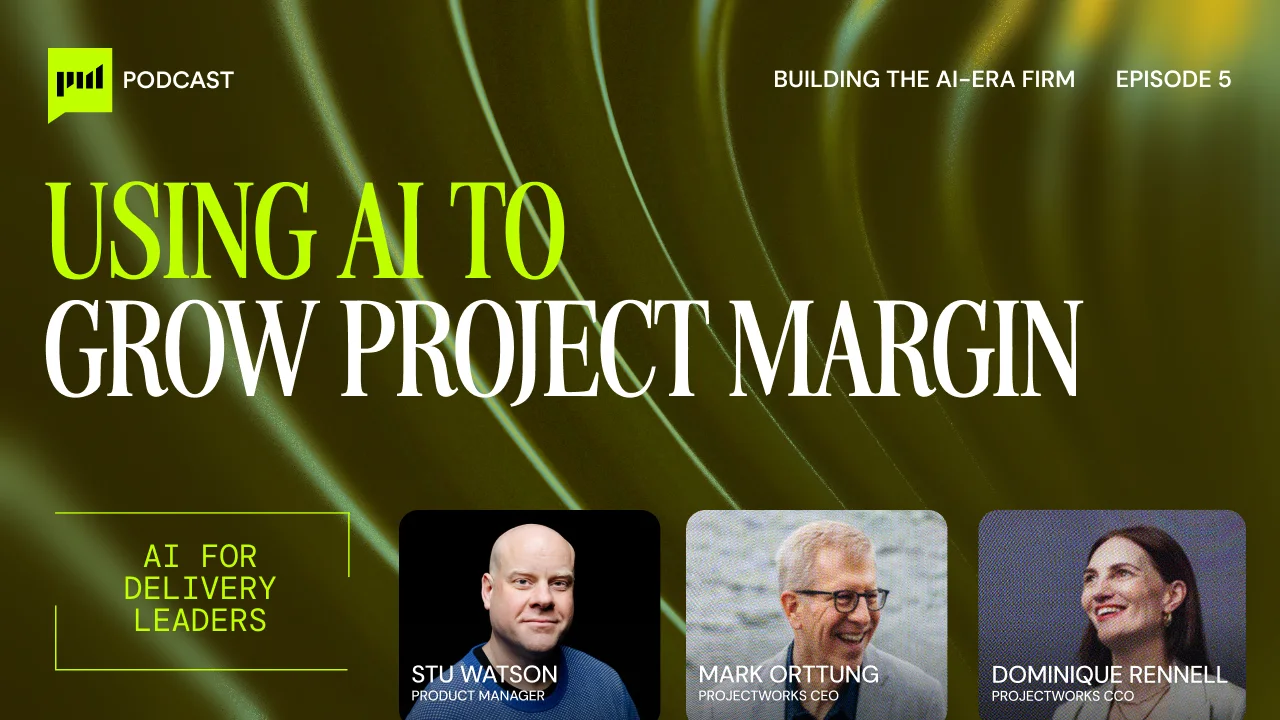
In a small firm, delivery quality holds because everyone works side by side and the founder touches every project. Then the firm grows, the founder runs out of hours, and work gets delivered by people who never learned your delivery method firsthand. Project margins turn inconsistent, and it's rarely the same reason twice. Most AI you've used so far waits for you to ask it something. Agents are different: they work in the background and tell you what needs attention before you'd have caught it yourself. This episode is about what that shift means for delivery, and we'll introduce Kea, the AI agent we're building inside Projectworks, and where we're taking it.
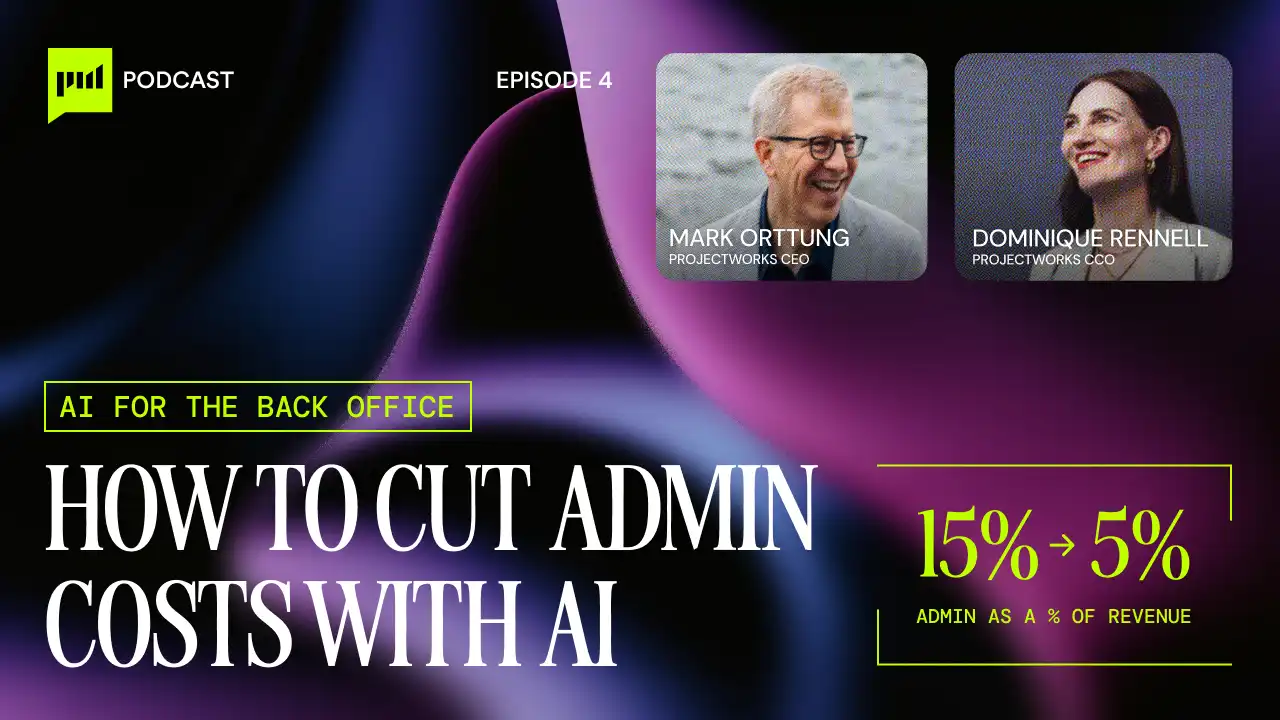
Timesheet chasing, invoicing, month-end, reporting, and the non-billable hours that go with them... its all necessary work in a consulting firm. Without it, clients don't pay you. It's costly though – for most firms, admin as a % of revenue sits at about 15%. Its a whole lot of cost that otherwise could be sitting in your EBITDA. In the AI era, the best consulting firms will bring this figure into the single digits. Learn how in this episode of the podcast.