7 Ways to Develop Junior Consultants Through Project Work in the AI Era


Learn how to develop junior consultants through project work in the AI era by building judgment, ownership, feedback, and client-ready skills.
Junior consultants have always learned by doing. Research, analysis, drafting, client preparation, and project support help them understand how consulting work fits together.
AI is changing that process. It can summarize documents, generate first drafts, organize notes, and support analysis in seconds. That can make junior consultants more productive, but it can also allow them to produce polished work without fully understanding it. When AI use in the workplace is becoming increasingly expected, the question for consulting firms isless about whether junior consultants should use AI and more about how they can use it without missing the experiences that build judgment.
1. Give Junior Consultants Ownership of an Outcome
Junior consultants develop faster when they understand how their work contributes to the overall project.
Instead of assigning disconnected production tasks, give them responsibility for a clear outcome. For example, rather than asking someone to summarize several reports with AI, ask them to identify the most important findings, verify the evidence, and explain what those findings mean for the client.
The assignment does not need to be large. A junior consultant might own a section of a presentation, a defined piece of analysis, or the preparation for a stakeholder interview. What matters is that they are responsible for the quality and usefulness of the result.
This approach reflects what early-career employees say they need.
2. Ask for a Point of View Before They Use AI
One of the simplest ways to prevent overreliance on AI is to ask junior consultants to form an initial view before using it.
They should be able to:
- explain the problem they are trying to solve,
- the information they need,
- and how they plan to approach the task.
Once they have a starting point, AI can help them test assumptions, explore alternatives, or improve the structure of the work.
A useful sequence is to review the task, form an initial hypothesis, use AI to challenge or extend the thinking, verify the output, and then present a final conclusion.
This gives managers greater visibility into how the consultant thinks. It also reduces the likelihood that the consultant will accept the first plausible answer an AI tool produces.
3. Teach Them to Always Validate AI Output
Generating an answer is not the same as completing the work.
AI-generated content can be convincing while still being inaccurate, generic, or poorly suited to the client. Junior consultants need to learn how to evaluate what a tool produces rather than treating it as a finished deliverable.
Managers can support this habit by asking questions such as:
- What did you verify?
- What did the AI miss?
- Which assumptions are being made?
- Why is this relevant to the client?
The goal is to make validation a normal part of project work, not an additional step performed only when something looks wrong.
4. Preserve the Work That Builds Consulting Judgment
Not every task should be automated immediately.
Some of the work AI can accelerate is also the work that helps junior consultants build foundational skills. Reading source material develops subject knowledge. Drafting a recommendation forces someone to make a choice and support it.
This might be creating an initial slide structure before using AI to identify gaps, or performing a key calculation themselves before using a tool to test additional scenarios. Or it might even simply be to just read the most important client documents directly themselves, and not just feed it to AI to summarize.
The key question is not simply whether AI can complete a task, but whether the junior consultant still needs to learn something by doing part of that task themselves.
5. Increase Responsibility in Stages
Junior consultants need a clear path from supported tasks to independent delivery.
They may begin by observing how an experienced consultant approaches a piece of work. Next, they can complete a defined task with close guidance, then own a full deliverable with agreed review points. Over time, they can present their work, manage selected client interactions, and eventually lead a small workstream.
AI can help them progress more quickly by reducing routine effort, but it should not lead managers to skip important development stages.
At each step, the consultant should know what they own, when their work will be reviewed, and when they are expected to ask for help. Greater responsibility should reflect stronger judgment, not just the ability to produce more content.
6. Give Feedback on the Thinking, Not Just the Output
AI can make weak reasoning look polished.
A well-written report or professional-looking presentation may still contain poor assumptions, weak evidence, or generic recommendations. Managers therefore need to review how the work was produced, not just what was submitted.
This feedback is most valuable when it happens close to the task. A short debrief after a meeting or deliverable can help the consultant connect the feedback directly to the decisions they made.
Managers should also explain their edits. Rewriting a junior consultant’s work may improve the immediate output, but explaining why it was changed improves future work.
7. Use Time Saved by AI for More Client Exposure
AI should create more room for development, not simply more production.
When routine work takes less time, junior consultants can spend more time preparing for client meetings, asking questions, presenting sections of the work, and following up on actions. These activities help build communication skills, confidence, and stakeholder awareness.
Client exposure should increase gradually. A junior consultant may begin by observing and taking notes, then contribute a question or short update, and eventually lead part of a conversation.
These experiences matter because consulting is not only about producing analysis, but about listening, adapting, explaining, and building trust.
Avoid Using AI as a Shortcut Around Development
AI can weaken junior consultant development when firms allow people to submit work they cannot explain, measure performance mainly through speed, or automate every foundational task.
It can also create problems when managers reduce coaching because delivery is faster or keep junior consultants away from clients because senior team members can now handle more of the work themselves.
The strongest development environments make the learning process visible. Junior consultants understand what they are expected to learn, how AI should support the task, and where they remain accountable.
Conclusion
AI is changing the work junior consultants perform, but it is not changing the fundamentals of how they develop.
They still need meaningful ownership, repeated practice, timely feedback, client exposure, and opportunities to exercise judgment.
Used well, AI can remove low-value effort and help junior consultants take on more responsibility sooner. Used poorly, it can hide gaps in understanding behind polished work.
Project managers should design assignments so that AI accelerates delivery without bypassing the learning. The goal is not simply to make junior consultants faster. It is to make them more capable.

Read similar resources from Projectworks

Discover practical ways to keep consultants productive between projects, from training and business development to internal work and project preparation.
.png)
This is your guide to all the updates across Projectworks in the month of August. There's new and updated integrations, upgraded resourcing and the opportunity to join early access to Kea, our AI Agent - something for everyone!
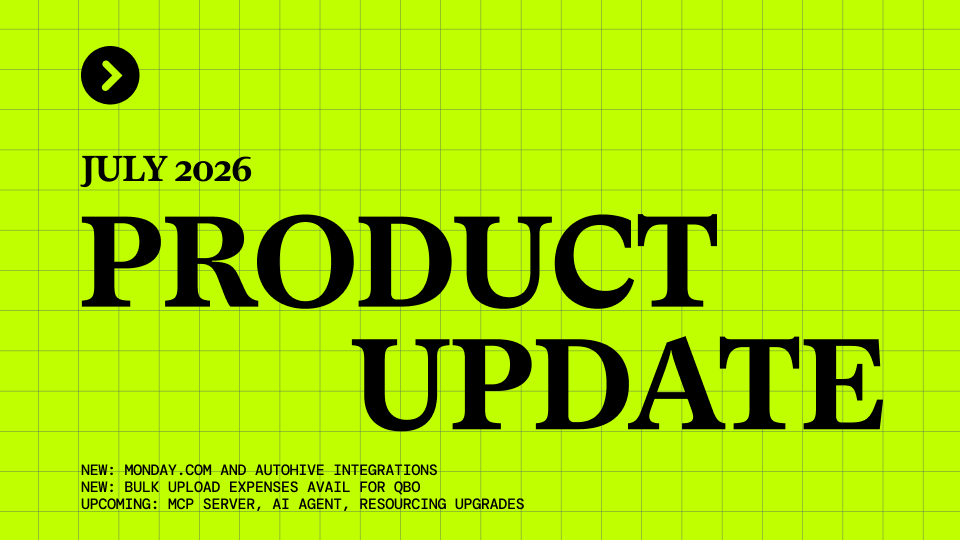
As we close out July, check out the newest integrations available to you, as well as enhancements across expenses and invoicing in Projectworks. There’s also some exciting upcoming new features and updates to existing features - we're looking for beta users for our upcoming MCP server and Rippling integration, could that be you?