AI-Driven Business Development
Every proposal, pitch, and scoping call is overhead you carry before a client says yes, and the faster you grow the more it stacks up. In the AI era that's changing, with cost per proposal dropping by as much as 75% at firms using the right tools and workflows. We'll dig into what those leading firms are running, and how to keep this cost from blowing out as you scale.


Is Your Business Development Becoming AI Native?
Ask yourself what it actually costs your firm to win a single piece of work. Not the fee you quoted, and not the discount you gave to close it. The work before that. The scoping calls, the tailored deck, the pricing debate, the two or three senior people pulled off billable work to write it. Most firms have never added it up. That number is the cost of winning work, and it sets how efficiently your firm can win more work as it scales.
Dominique Rennell, our CCO, has watched the pattern from the inside for years.
That rush has a name and a number. Cost per proposal is the non-billable time a firm spends to prepare and submit a proposal, and it is one of the clearest measures of how well you win work. The faster you grow, the heavier it gets. This piece is about why that happens, and what AI-driven business development can do about it.
Why winning work gets more expensive as you grow
Growth covers a lot of sins. It funds the next hire, absorbs the odd bad month, and gives everyone a reason to push. But there is a catch that most firms feel before they can name it. The engine of that growth is winning work, and winning work costs money before it makes any. Every proposal is a bet your firm places with no guarantee of a return. Scale the firm, and you scale the number of bets. That is why cost per proposal belongs on the same dashboard as utilization and margin. It is the price of the growth you are chasing.
What is cost per proposal, and what is it really costing you?
Start with the plain definition:
What is CPP (Cost Per Proposal)? Cost per proposal is the non-billable time it takes to prepare and submit one proposal, and most of that time comes from billable people who could have been on client work instead.
Our data shows that professional services firms submit an average of 91 proposals a year, and each one takes around 23 hours to put together. Do the arithmetic and that is roughly 2,093 hours a year, more than a full working year of one person's time, spent on work that only sometimes converts. It is not junior time, either. Senior staff, the partners and principals and technical leads, contribute about 47% of proposal development time, close to 11 hours on every proposal.
Now weigh it against what comes back.
Across professional services, the average win rate reported is about 47%. Even at that healthy rate, more than half of all that senior effort ends in a polite no. Lifting the number is its own discipline, and we pulled five field-tested moves into five ways to win more work.
The math would be survivable if deals were getting bigger, but they’re actually getting smaller.
Across Projectworks platform data, the average number of signed projects rose 266 percent from 2023 to 2025, from 18 to 66, while the average project budget fell 56 percent, from $74,828 to $32,632. More work, worth less each. That is the proposal paradox, and it lands the pressure squarely on business development.
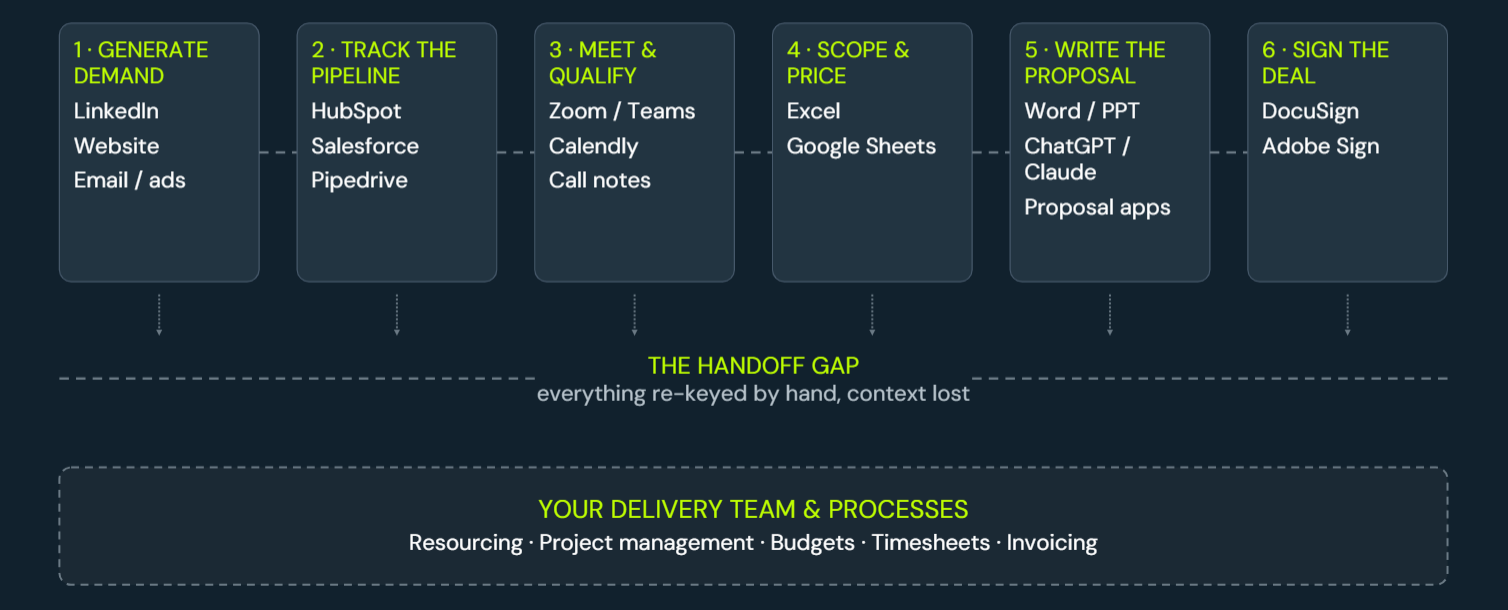
A dozen disconnected tools to win a single project
The typical professional services BD workflow, with each stage in a different app, and none of them wired to how you actually deliver:
It's all relationships: the services value chain
Consulting does not sell the way software does. Work moves along a value chain with four stages that run from prospecting for new leads, to hunting to convert them, to delivering the work, and finally to farming the accounts you have already won. Most firms fixate on the first two but earn most of their new work from the last one. On average, 55% of proposals go to existing or repeat clients.
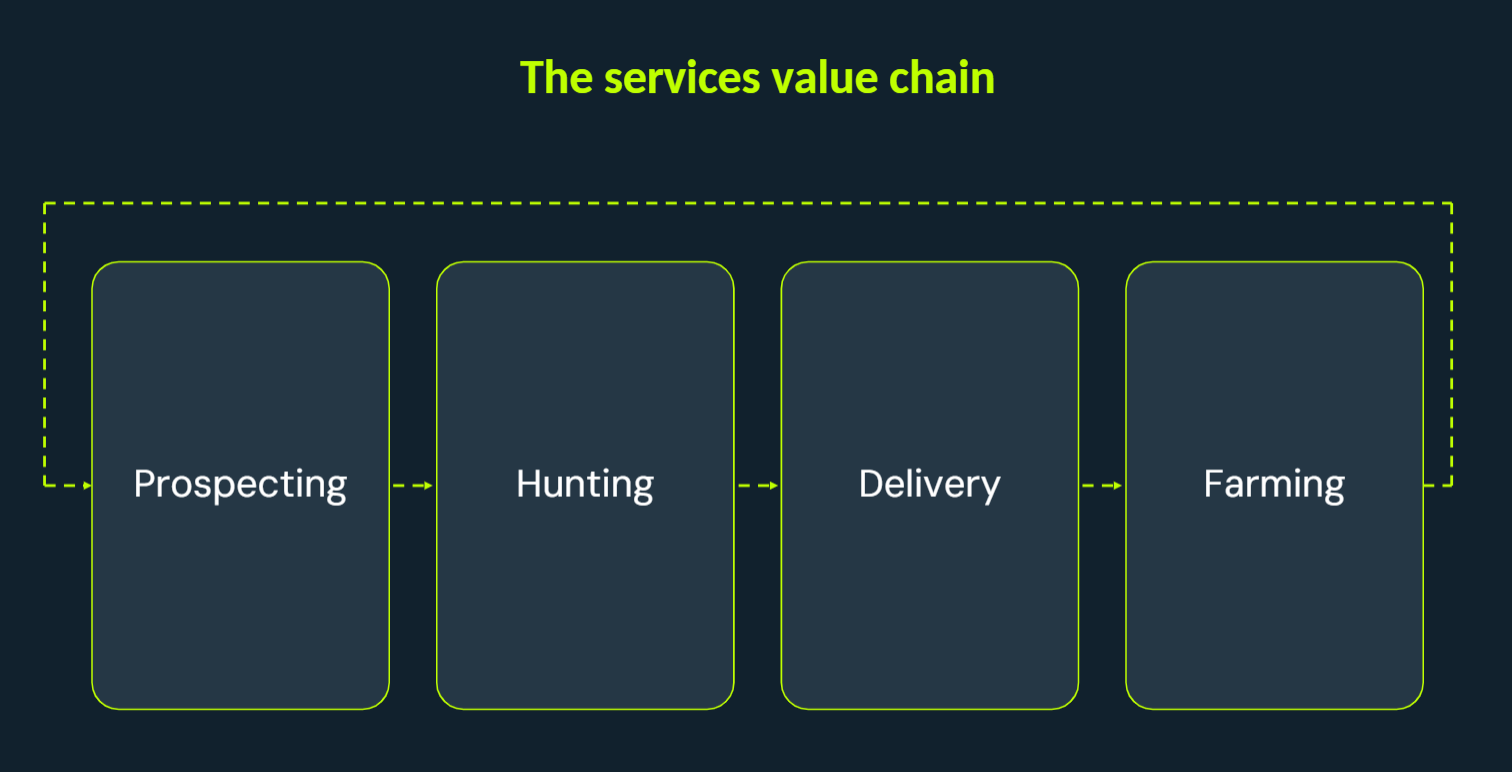
The temptation, once you see that, is to pick a lane. Just farm the big accounts, or just chase new logos. Mark tried to answer that question at Nexient, the firm he grew from $34 million to $131 million, and landed somewhere less convenient.

When I first took over at Nexient, we had a lot of debates in our board meetings about whether we wanted to focus on new clients or focus on farming and expanding within the clients we had already won. And it kind of seems super obvious in retrospect, but at the time, we would debate it and we wound up with the conclusion that it was both. We had to do both all the time.
Proposals that draft themselves, with your team holding the pen
A consulting CRM is built around proposals and relationships rather than the cold deal stages of a sales funnel, because that is how firms actually win work.
The idea is a draft built from your own firm's data, the right team, realistic timelines, sensible budgets, written in your firm's voice, and connected to live delivery information so the numbers reflect how you actually work. Your people still hold the pen. The software handles the first 80 percent that used to eat the evening.
Underneath it sits a single record for each opportunity, what a CRM calls a deal, where the effort going into a bid can be tracked in one place.
The deal object is a really natural place to track. How many hours are going into this proposal? We can now separate out the cost to sell something versus the cost to deliver something.
Separating cost to sell from cost to deliver is the quiet unlock. It turns cost per proposal from a number you feel into a number you can manage. The goal is to take that 24-hour average and pull it down toward a handful of hours.
(If you want the fundamentals first, our guide to writing a consulting proposal covers the structure the AI is trained to fill.)
From proposal to resourcing: closing the loop
The best part comes after you win. The hours you estimated to price the proposal are the same hours you need to resource the project, so that knowledge can do double duty instead of being re-keyed from scratch. Win the work, and the plan to deliver it is already half built.
Making that loop work depends on connected data. AI-enabled firms are increasingly connecting their tools using what is known as MCP, which lets the AI tools your team already uses, like Claude or ChatGPT, read and act on your firm's own data. Ask which people are free for a new project, and the answer comes from your live plan, not a guess.
In addition to MCP, at Projectworks we also have an AI team-mate built into Projectworks itself, that starts with resourcing and works as an adviser rather than an autopilot. The AI makes suggestions, but the human makes decisions.
Is your business development going AI-native?
Step back and the direction is clear. A firm that connects its selling and its delivery, and puts capable AI on top of that connected data, starts to get leverage it never had before. The value isn't in any single feature. It is in having the whole picture in one place, then letting software act on it, not just record it.
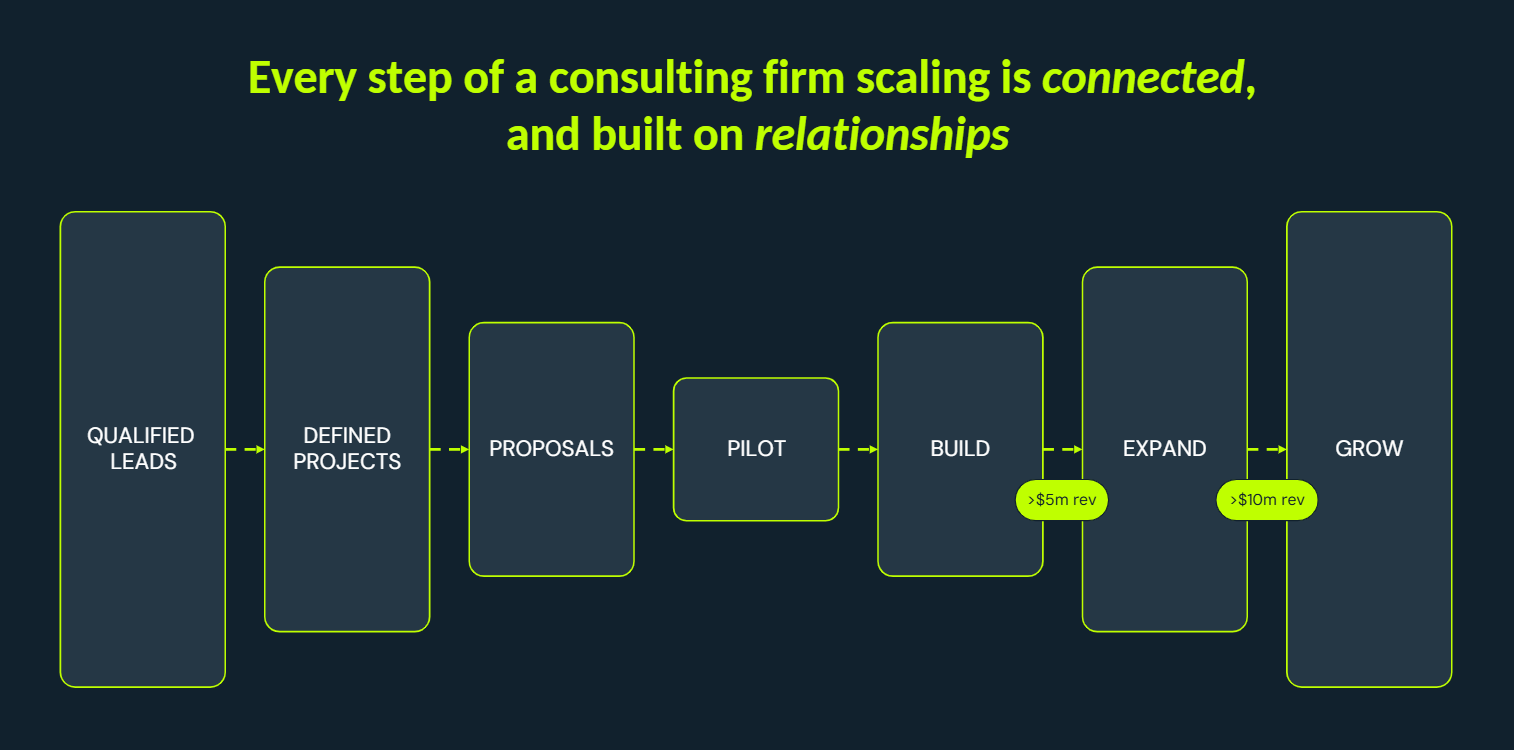
That is why business development is the right place to start. It is the most expensive, most manual, most senior-heavy part of running a firm, and it is the part where connected data and AI change the economics fastest. The firms that get there first will bid faster, price sharper, and spend less of their best people's time chasing work that pays nothing until it lands. It is not a coincidence that the firms already running this way tend to grow. Firms on Projectworks grow 20 percent on average in their first year.
Cost per proposal is the tax you have been paying without a line item. You can keep absorbing it, or you can start to measure it and bring it down.


Listen to moments from similar podcasts
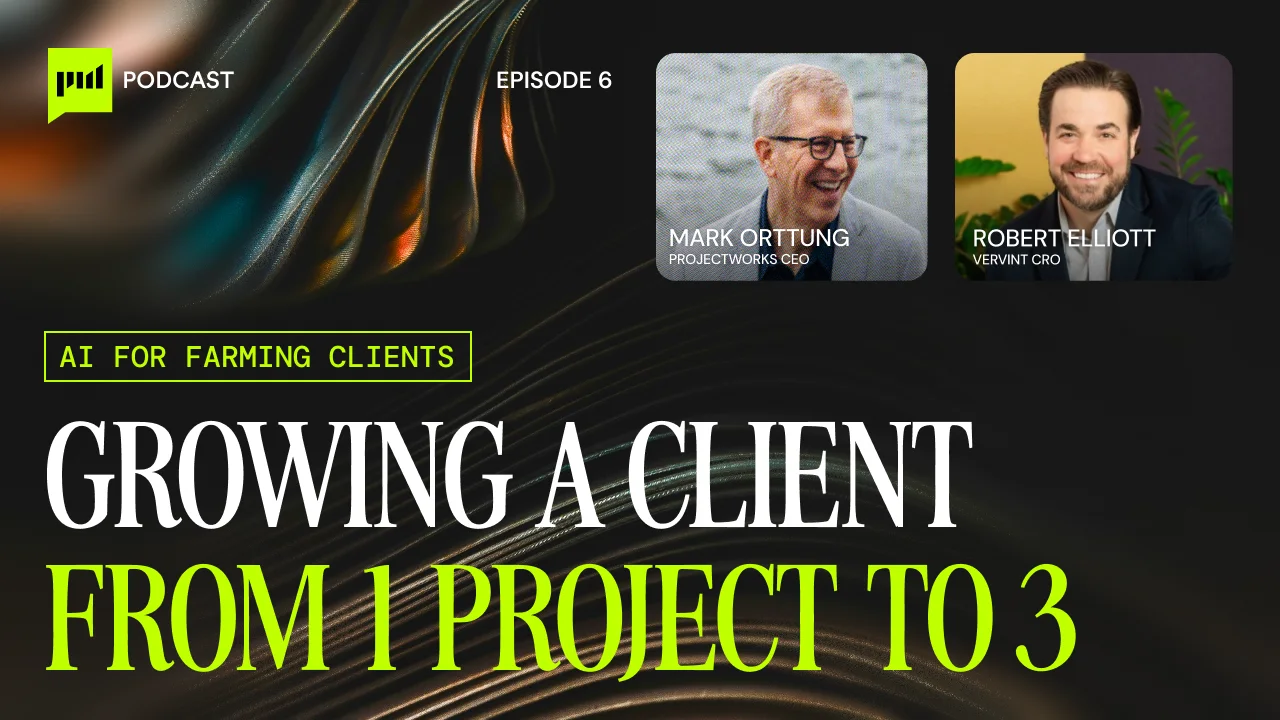
For many consulting firms, the one-project client is the norm and the long-term partnership is the exception, which is backwards given how much cheaper repeat work is to win. This episode is about making that step deliberate rather than accidental. We'll share the play-by-play breakdown of how fast growing firms identify the right client accounts it invest in, how they grow them, who's involved in the relationship, and where AI makes it all easier.
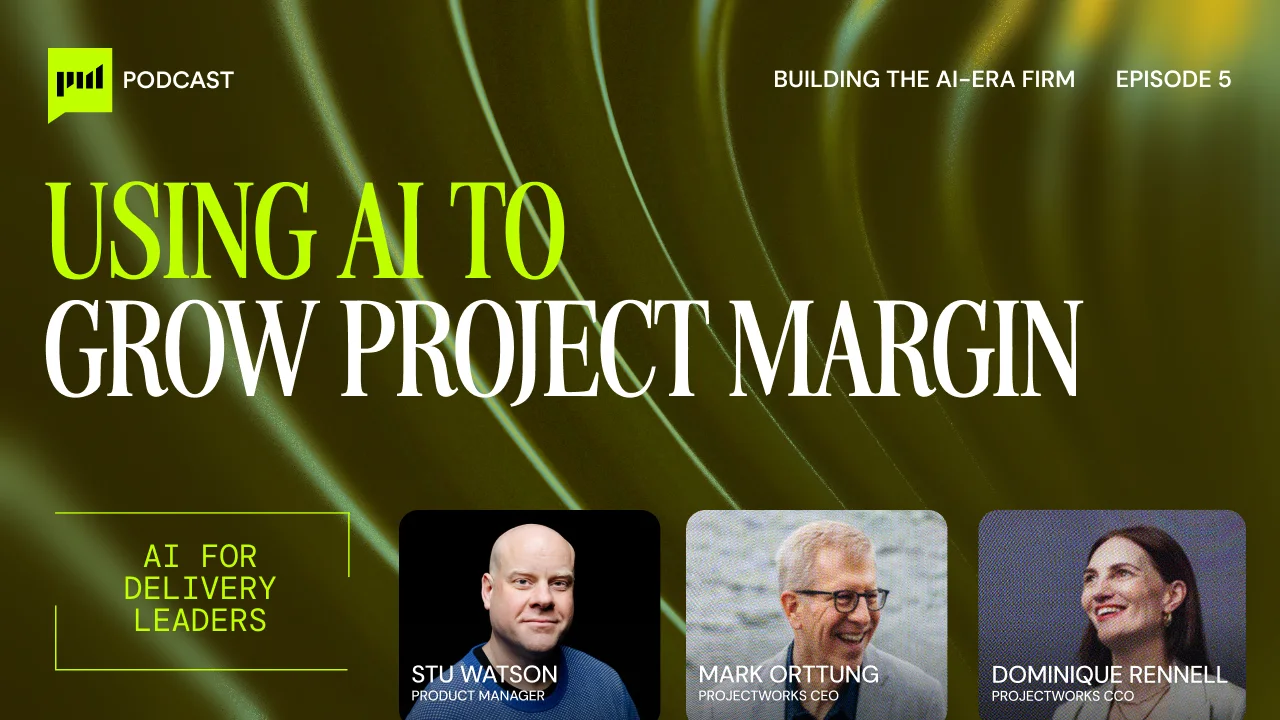
In a small firm, delivery quality holds because everyone works side by side and the founder touches every project. Then the firm grows, the founder runs out of hours, and work gets delivered by people who never learned your delivery method firsthand. Project margins turn inconsistent, and it's rarely the same reason twice. Most AI you've used so far waits for you to ask it something. Agents are different: they work in the background and tell you what needs attention before you'd have caught it yourself. This episode is about what that shift means for delivery, and we'll introduce Kea, the AI agent we're building inside Projectworks, and where we're taking it.
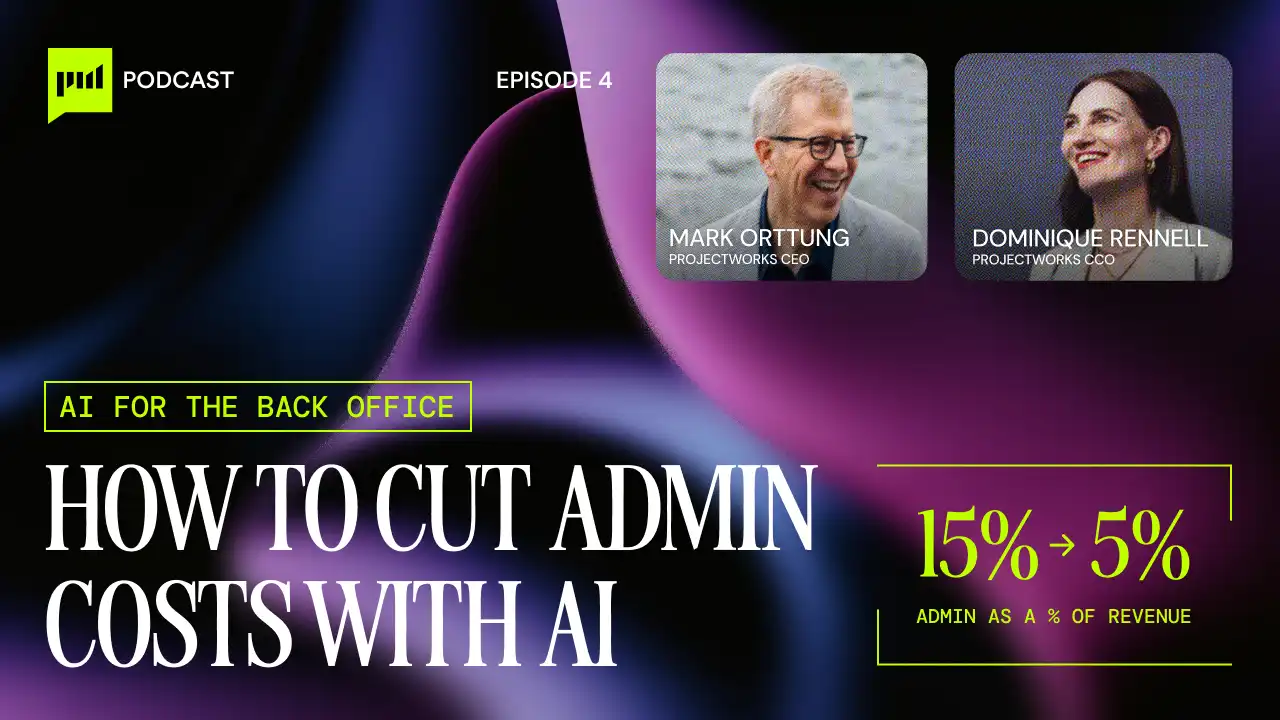
Timesheet chasing, invoicing, month-end, reporting, and the non-billable hours that go with them... its all necessary work in a consulting firm. Without it, clients don't pay you. It's costly though – for most firms, admin as a % of revenue sits at about 15%. Its a whole lot of cost that otherwise could be sitting in your EBITDA. In the AI era, the best consulting firms will bring this figure into the single digits. Learn how in this episode of the podcast.