


IT consulting firms pitch AI to clients, then run on spreadsheets. In this article, we explore where the IT firms pulling ahead actually use it, and what it's worth per employee.
Last month your firm probably pitched an AI roadmap to a client. Meanwhile, your own resourcing plan lives in a spreadsheet that went stale two weeks ago, and the proposal for that fintech prospect consumed 40 hours nobody tracked.
That's the strange position IT consulting firms are in. The industry sells AI transformation for a living, yet most firms haven't run it on their own business, and the market won't wait. Over 1,200 new IT and software consulting firms launch every month in the US alone. The firms getting ahead with AI are the ones who are following their own good advice (and not just presenting it in a slide deck to their clients).
Why IT consulting firms can't sit this one out
AI is reshaping IT consulting from both directions at once. On the supply side, it now automates much of the sourcing and screening work that staffing-heavy firms built their leverage on. On the demand side, it's creating a wave of AI-enabled projects where clients expect measurable outcomes, not bodies in seats.
Some firms are doubling down on value and elevating from outsourced development to genuine strategic partnership. Others are caught flat-footed, bleeding time on back-office admin. The backdrop makes that divide expensive: AI-powered boutiques are already encroaching on territory once owned by the biggest names in consulting (Business Insider, 2025), and if they can take work from MBB, they can take work from you.
The good news is that mid-sized firms are better placed for this moment than almost anyone, big enough to have bench strength and track record, small enough to pivot at a speed the Accentures of the world can only put in a strategy deck. The window is real. It's just not open indefinitely.
How do IT consulting firms use AI in client delivery?
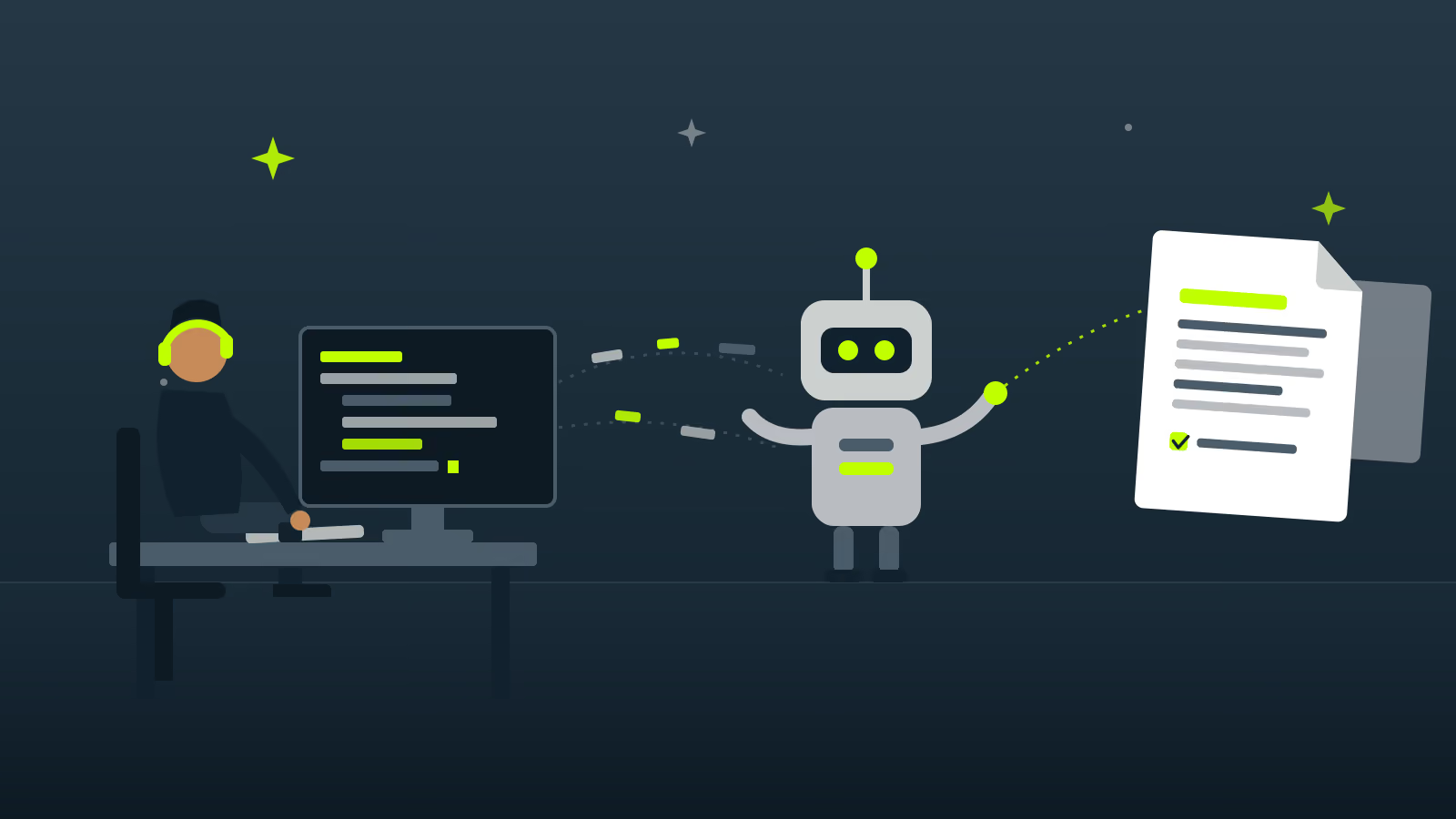
Delivery teams are using AI to generate and review code, write the documentation that never got written, extend test coverage, and pull past architectures out of the project graveyard so new teams ramp in hours instead of days.
(If yours aren't working this way already, close that gap this quarter.)
But be honest about what delivery AI buys you against the field: not much, because every competitor has the same tools.
Delivery AI in 2026 is what source control was in 2010. Necessary, invisible, and no client ever hired a firm because of it. It keeps you in the game. It doesn't get you ahead.
The firms getting ahead run AI on their own operations
The enterprise world has a name for this idea: Client Zero. It’s where you test your AI internally before selling it to anyone else. IBM credits the approach with $4.5 billion in productivity gains, deploying it across more than 400 internal workflows.
The best part is that the version that matters for a 50-person professional IT services firm is far simpler and more immediately profitable. Point AI at the operations you've been running on spreadsheets and institutional memory. As one of the US software services experts in Built for Growth put it, if you're still building ops in spreadsheets, you're not ready for what's next.
In most IT consulting firms, those hours are hiding in three places.
1. Proposals and winning work
Software services firms average 41 hours per proposal, the highest of any consulting vertical, while among teams winning more than half their RFP submissions, over 72% use AI in proposal writing. The distance between those numbers is where deals are being won and lost.
Who does the work matters as much as how long it takes. Nearly half of proposal effort comes from senior staff, the same people who should be selling the next engagement and delivering the current one. AI-assisted drafting, past-proposal retrieval, and compliance checking hand time back to the most expensive people in the building.
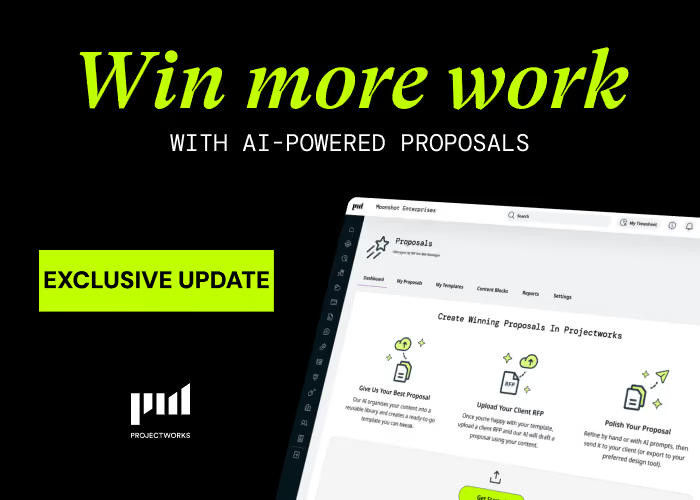
2. Resourcing and capacity decisions
Resourcing in most firms still runs on one overloaded spreadsheet and whoever holds the staffing memory that week, which works until the firm outgrows what one person can hold. AI changes the information problem first: who's available, who has the skills, and what the pipeline means for capacity in eight weeks stop requiring an archaeology project.
3. Forecasting and the money side
Revenue forecasting is a chain of guesses about pipeline probability, project burn, and invoice timing. AI is good at exactly this shape of problem, where the answers already exist somewhere in your systems if something can pull them together fast enough to matter. Firms that connect those systems see a cash problem six weeks out instead of at month-end. That's the difference between a plan and a scramble.
What separates the professional IT services firms pulling ahead
Not tool count. The firms pulling ahead pointed AI at their most expensive constraint, which in consulting is almost always senior time, and worked outward as each workflow proved itself.
The winners also did the unglamorous part first. Most firms' operational data is scattered across a CRM, a spreadsheet, a PM tool, and three people's heads, and AI cannot reason over chaos. Consolidating that data is boring work nobody posts about on LinkedIn, and it's the actual prerequisite.
TSIA put it plainly in their State of Professional Services 2025 report: most professional services organizations are still stuck in the starting blocks on AI, and that won't last. Their advice was to start small rather than wait for a grand rollout. Ours too. One workflow, measured honestly, then the next.
Start where the hours are
The AI market in professional services is projected to grow at 32.4% a year through 2030 (BPM, 2026). That growth happens whether your firm participates or not. So does your competitors' adoption.
Find the workflow eating the most senior time, point AI at it, measure the result, and do it again. The firms getting ahead didn't transform anything overnight. They compounded.

Read similar resources from Projectworks
It's the end of September and expenses got a lot of love this month, with a couple of big changes you can start using today and more on the way! We've also made updates across financial reporting, resourcing, HubSpot, and invoicing, dive in to see what's new.
PSA software with built-in CRM, or a separate CRM? For consulting firms, one system usually wins. Here's why.
.png)
This is your guide to all the updates across Projectworks in the month of August. There's new and updated integrations, upgraded resourcing and the opportunity to join early access to Kea, our AI Agent - something for everyone!