Resource Optimization Strategy To Double Your Growth Rate
New Projectworks data from over 700 firms points to one operational habit separating the fastest growers from the rest. (Spoiler alert: It's resource optimization.)



The question most consulting leaders ask about resourcing is whether they have enough pipeline to keep people busy. The question that actually drives growth is different: how far ahead are you resourced? The data shows that firms with strong forward resourcing practices don't just run better operationally. They grow faster, generate more revenue per person, and produce significantly stronger margins.
At Projectworks, we analyzed resource planning patterns aggregated across 700+ companies within our customer base, and found a consistent split between firms with forward visibility and those without.
The results were clear.
Firms that resource 50% or more of their staff at least eight weeks out show measurably stronger results across every metric tracked. Investing in resource management software gives you that visibility to make better resource planning decisions for your firm.
Here is what that utilization optimization looks like in practice:
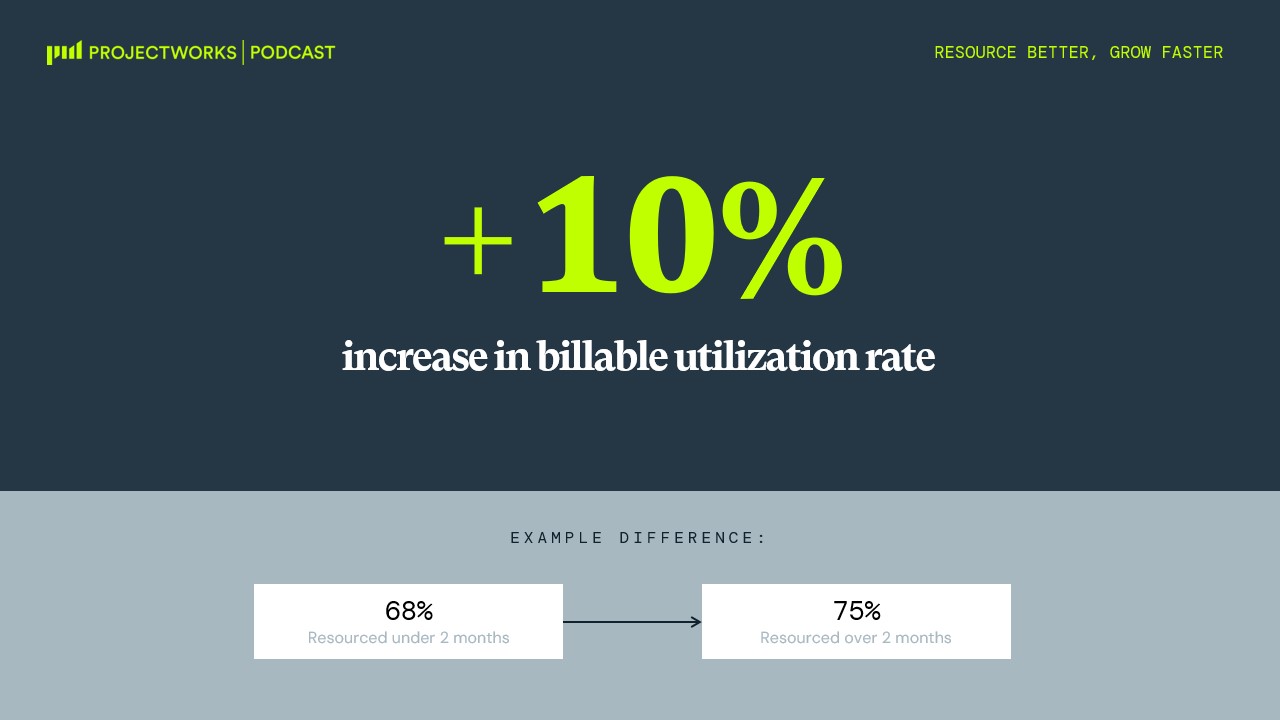
At first glance, 68% versus 75% doesn't sound dramatic. But if you work through what that gap means for margin, the picture changes fast.
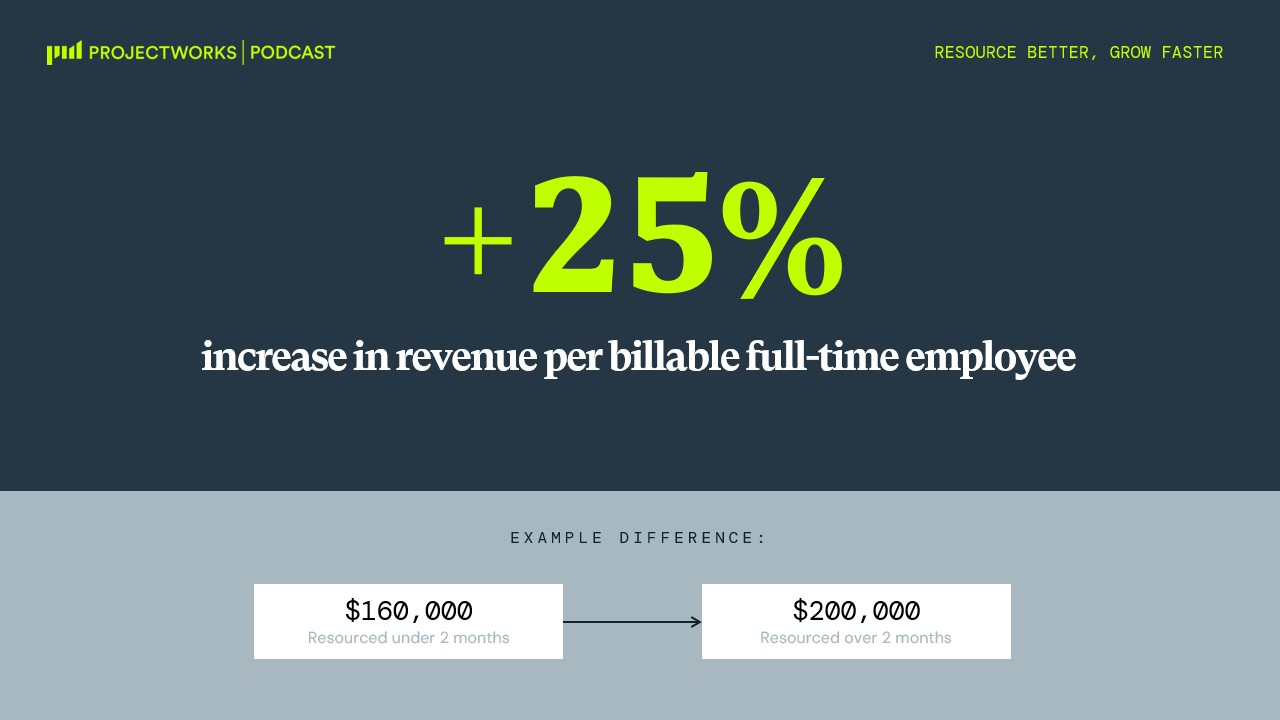
With the team you already have, resource optimization is a direct lever on revenue. No new hires required.
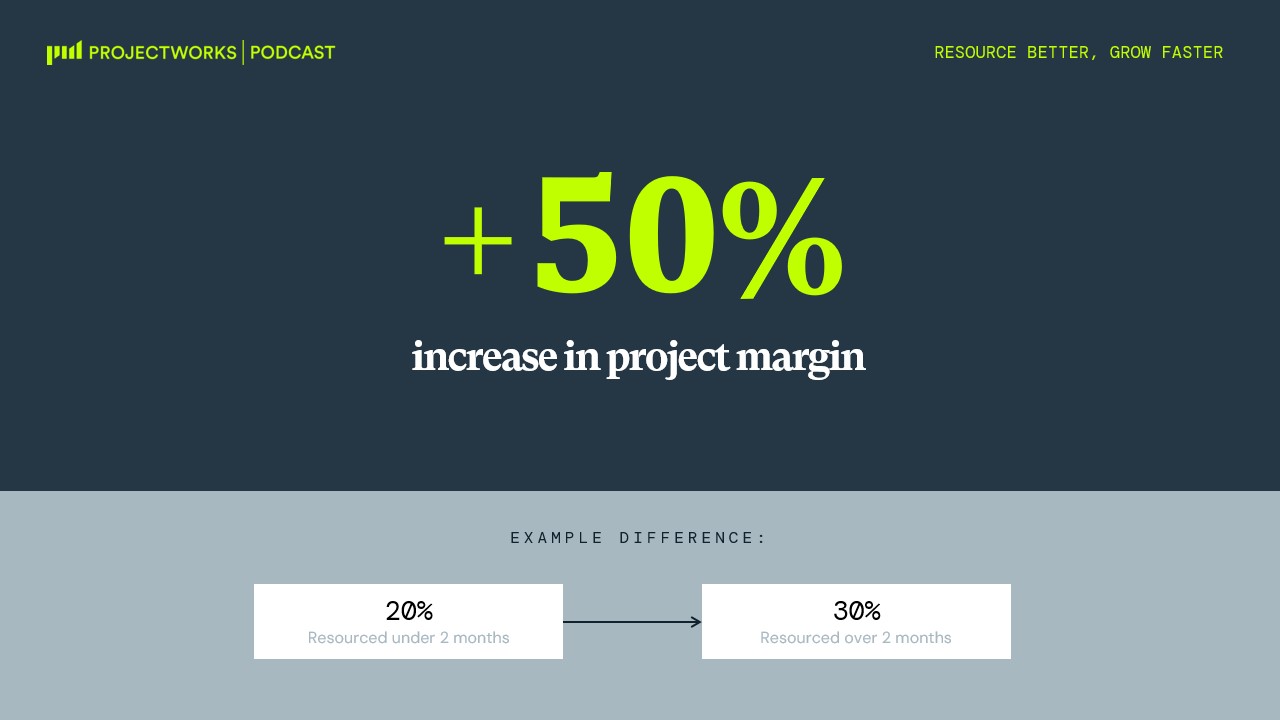
This one comes down to team composition. When you have real visibility over who is available and what they cost, you stop staffing from whoever happens to be free and start making decisions that protect the margin you quoted.

Firms with stronger resource planning practices grow at roughly twice the rate of those without. For anyone thinking about firm value, growth rate is one of the top two or three metrics a buyer looks at. Doubling it changes the conversation entirely.
At 75%, those results improved further still.
What resource optimization looks like in dollar terms
Percentages are useful, but dollars make it real.
So let’s take a look at what that same resource planning gap looks like across three firm sizes, holding all other assumptions constant: 10% sales and marketing costs, 10% admin costs.
The only variable across all three scenarios is how far ahead the firm is resourced.
Same team size.
Same cost structure.
The difference between breaking even and generating meaningful operating profit comes down to one operational habit.
Why utilization optimization is the metric that drives everything else
All the other metrics follow from one thing: closing the gaps between when one project ends and the next begins.
A week lost here, a free resource for two weeks there... In the moment, these feel like small concessions. Over a quarter, they add up fast. As Mark Orttung put it, "It's so easy in consulting: a week slips, or you give somebody a free resource for two weeks, and you don't really do the math on how much money you just gave away or how much your margin just dropped."
To put a number on what poor resource utilization is actually costing your firm, we can break down the full bench time cost formula here.
One resource optimization habit that makes an outsized difference is simply asking for renewals four to six weeks before a project ends, instead of in the final week. Getting to the last week and triggering a three-week renewal process means three weeks of bench time that was entirely avoidable.
Senior staff on the bench cost disproportionately more than junior staff. When capacity gets tight, the priority is getting your most senior people billable first. Two or three senior people sitting idle for a month is a material margin problem.
When things were challenging at Nexient, Mark Orttung shares, the team would sort the bench by seniority and cost, and work hard to get those senior people billable. Getting two or three of them back on projects would make a significant difference to margin for the week or the month.
"Closing all those gaps down raises utilization, and then all the other metrics go with it."
Mark Orttung, CEO, Projectworks
Who owns resource optimization and how to run it
At 20 to 50 staff, resource planning sits with whoever is running delivery. Give that person real-time project management reporting tools, and they can model scenarios and move allocations fast.
At 100-plus staff, you have enough operational weight to warrant dedicated back-office support for resource management, but the delivery lead still has to stay close to it either way.
The question of whether project managers should own resourcing comes up often. In smaller firms, the PM and the senior delivery owner are often the same person, and they absolutely need to be advocating for the right team on their projects. In larger firms, there is usually a more senior person who holds the firm-wide view and runs the central resourcing meeting.
The utilization metrics that should be front and center in every weekly resourcing meeting are:
- Billable utilization rate
- Revenue per billable employee
- Project margin
Read our guide for consulting firms on how to calculate your utilization rate.
How long before resource optimization improvements show up in results
If you commit to the practice, resource optimization improvements can start to show within one to two quarters.
Start this week. Run a resource planning meeting with pipeline and capacity on the same screen. Ask for renewals four to six weeks before project end, not in the final week. Sort your bench by seniority and cost, and prioritize getting senior people billable first.
From there, the habits compound. Better resource visibility leads to better hiring decisions. Better team composition at the project stage leads to better margin. Better margin gives you room to run a healthier billable utilization rate and invest in developing your people.
"There is so much opportunity being left in how you operate projects. You celebrate winning the half-million-dollar project. There should be the same amount of focus and effort into operating it as efficiently as possible."
Dominique Rennell, CCO, Projectworks
The firms in this data that grow at twice the rate are not doing twice the selling. They are doing a better job of operating the work they already win. Forward resourcing is where that starts.
If you want to see what this looks like in practice, book a demo of Projectworks or start a free trial and run your first resourcing meeting with full pipeline visibility.


Listen to moments from similar podcasts

For many consulting firms, the one-project client is the norm and the long-term partnership is the exception, which is backwards given how much cheaper repeat work is to win. This episode is about making that step deliberate rather than accidental. We'll share the play-by-play breakdown of how fast growing firms identify the right client accounts it invest in, how they grow them, who's involved in the relationship, and where AI makes it all easier.

In a small firm, delivery quality holds because everyone works side by side and the founder touches every project. Then the firm grows, the founder runs out of hours, and work gets delivered by people who never learned your delivery method firsthand. Project margins turn inconsistent, and it's rarely the same reason twice. Most AI you've used so far waits for you to ask it something. Agents are different: they work in the background and tell you what needs attention before you'd have caught it yourself. This episode is about what that shift means for delivery, and we'll introduce Kea, the AI agent we're building inside Projectworks, and where we're taking it.

Timesheet chasing, invoicing, month-end, reporting, and the non-billable hours that go with them... its all necessary work in a consulting firm. Without it, clients don't pay you. It's costly though – for most firms, admin as a % of revenue sits at about 15%. Its a whole lot of cost that otherwise could be sitting in your EBITDA. In the AI era, the best consulting firms will bring this figure into the single digits. Learn how in this episode of the podcast.