3 Questions That Reveal Whether Your Consulting Firm Is Built To Scale
Many consulting firms look healthy from the outside, yet behind the scenes everything is only just holding together. Often the problem comes down to operational infrastructure that isn’t fit for purpose. Common examples include everything still depending on a small number of people, leadership teams avoiding the elephant in the room, and the firm’s Founder being the only source of new business. Sound a little too close to home? Read on, or watch the latest episode of the Projectworks Podcast below.
.avif)


Is your leadership team having the right conversations, or avoiding them?
A firm built to scale has a leadership team and culture that deals with the real issues. Problems are raised early, challenged directly, and resolved clearly. Sounds simple enough in practice right?
Unfortunately many firms struggle to build the type of leadership team and culture that fuels growth. The cost of which shows up quickly: Decisions slow down. Misalignment grows. Issues drift instead of getting solved. Meetings happen but the most important conversations aren’t taking place.
This is rarely just a communication problem. It usually points to weak trust, unclear accountability, or both. And those gaps get harder to hide as the business grows.
Strong firms spend time together as a leadership team, and they use that time well. They confront the hard issues, make decisions, and move forward.
Could your firm keep moving if the founder stepped away for a week?
If your business would stall or start escalating everything upward within a few days, then too much still depends on one person. That may be the founder, CEO, or another senior leader, but the underlying issue is the same: the firm has not distributed enough judgment, trust, or ownership.
The key is hiring senior leaders who have the confidence, the ownership and the authority to make decisions, maintain standards, and keep your consulting firm moving without intervention.
Interested in our consulting growth cheat sheet? Grab your copy here.
Has anyone on your team won a new client without the founder being involved?
This is a strong test of whether growth is spreading through the firm or staying concentrated at the top. In firms that scale well, commercial capability extends beyond one person. Senior leaders build trusting relationships with existing and prospective clients. And from those relationships they create opportunities, win new work, and grow accounts.
In firms that do not, the founder remains at the centre of every important commercial moment. They open the door, carry the relationships, rescue the account, and endlessly chase the next opportunity.
The firm may still be growing, but the growth strategy has not matured, which creates a ceiling. If too much commercial ownership sits with one person, the firm becomes difficult to scale and hard to run.
What these questions really reveal
These questions point to the core conditions that make scale possible: trust, leadership capacity, and shared commercial ownership – which starts with your consulting firm having visibility on what’s working and what’s not.
Projectworks helps consulting firms build that type of performance infrastructure with better visibility and stronger control of your projects and financials.
If you’re interested in taking a look, book a demo today.


Listen to moments from similar podcasts
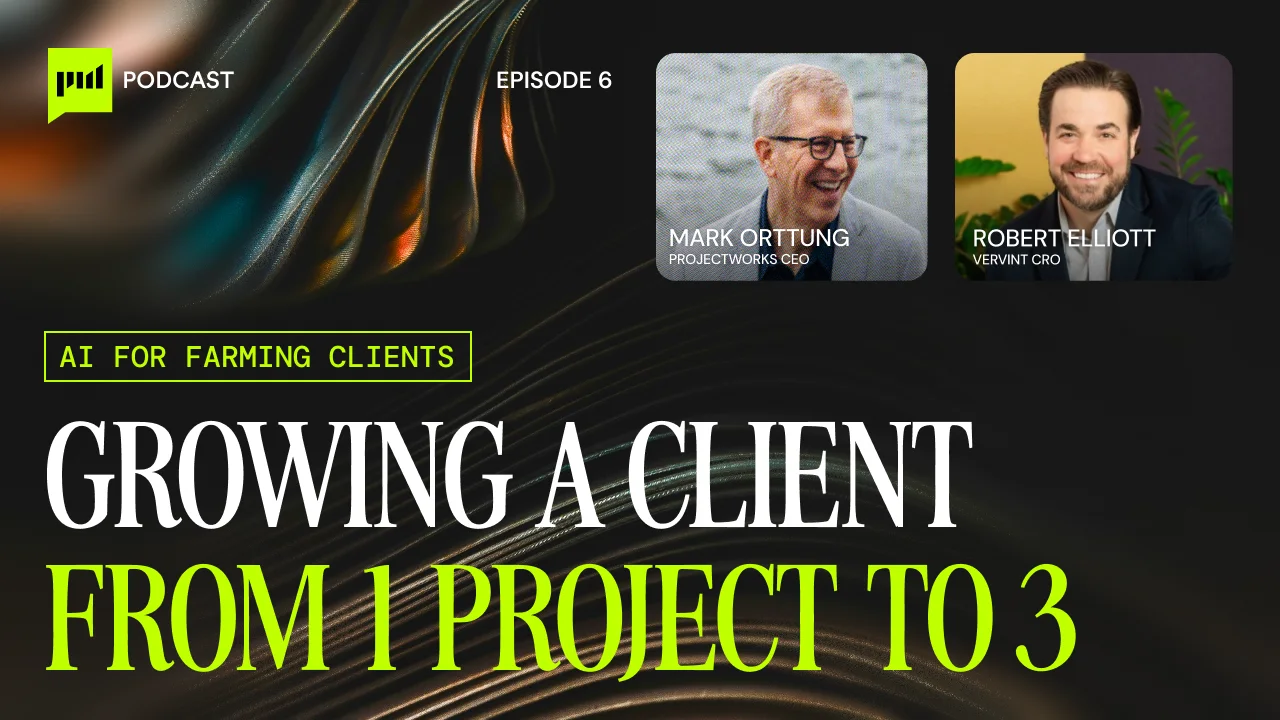
For many consulting firms, the one-project client is the norm and the long-term partnership is the exception, which is backwards given how much cheaper repeat work is to win. This episode is about making that step deliberate rather than accidental. We'll share the play-by-play breakdown of how fast growing firms identify the right client accounts it invest in, how they grow them, who's involved in the relationship, and where AI makes it all easier.
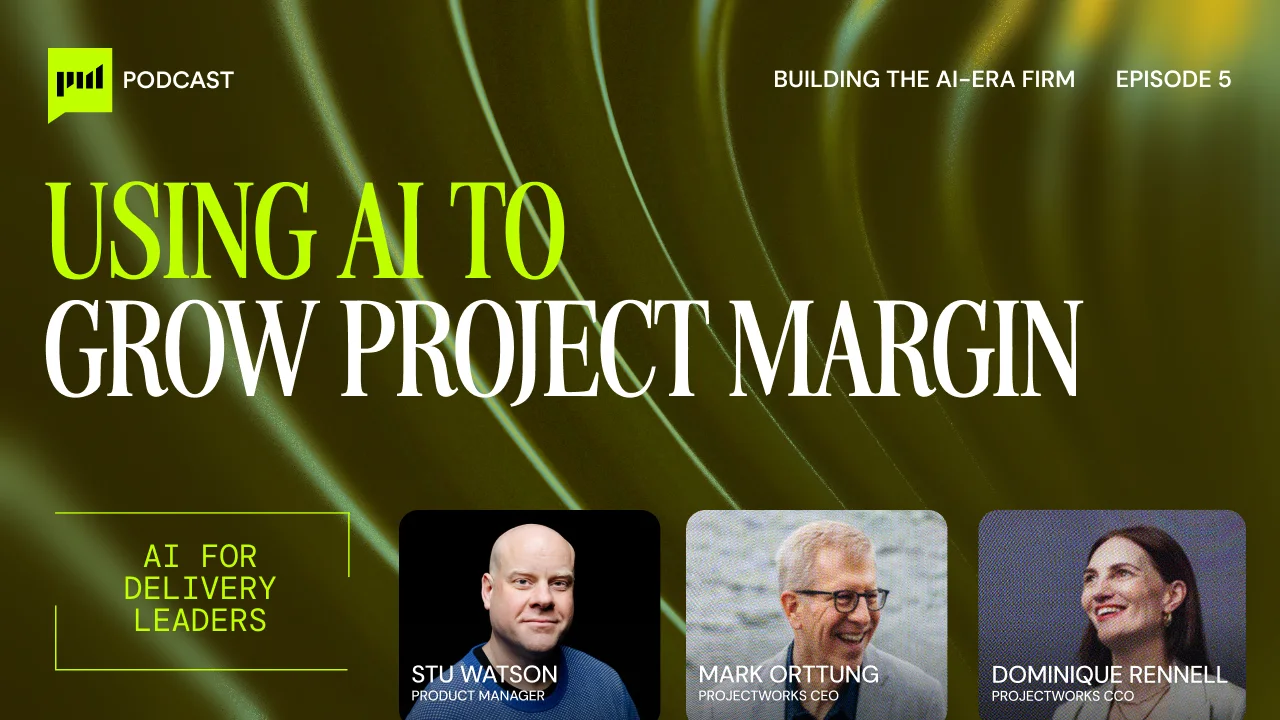
In a small firm, delivery quality holds because everyone works side by side and the founder touches every project. Then the firm grows, the founder runs out of hours, and work gets delivered by people who never learned your delivery method firsthand. Project margins turn inconsistent, and it's rarely the same reason twice. Most AI you've used so far waits for you to ask it something. Agents are different: they work in the background and tell you what needs attention before you'd have caught it yourself. This episode is about what that shift means for delivery, and we'll introduce Kea, the AI agent we're building inside Projectworks, and where we're taking it.
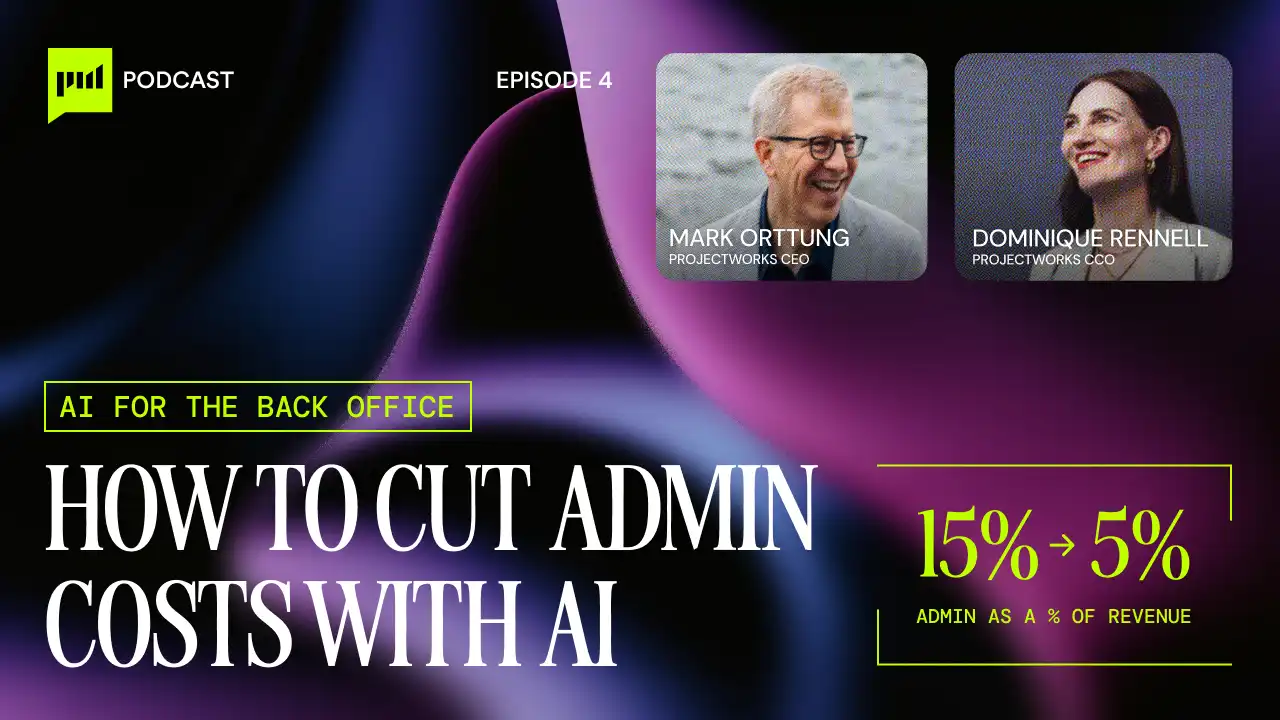
Timesheet chasing, invoicing, month-end, reporting, and the non-billable hours that go with them... its all necessary work in a consulting firm. Without it, clients don't pay you. It's costly though – for most firms, admin as a % of revenue sits at about 15%. Its a whole lot of cost that otherwise could be sitting in your EBITDA. In the AI era, the best consulting firms will bring this figure into the single digits. Learn how in this episode of the podcast.