Most M&A's fail. Here's how to make sure yours doesn't.
I thought selling a consulting firm would be like landing a big project. Turns out, it’s nothing like that. It’s emotional. It’s messy. It’s six months of all-consuming work. In Episode 01 of Z Suite Live, I swapped M&A battle stories with Allen Debes, CEO of Koniag Capital. We've pulled together the five things we wish we’d known before our first deal. It’s not a corporate M&A manual. It’s a founder’s cheatsheet you can use tomorrow. Steal it. Use it. Tell me how it goes.




Mark & Allen's M&A Cheatsheet.
🏗️ 1. The Groundwork
Sell-Side: Get out of spreadsheets
If you’re running your firm on spreadsheets, your data won't be accurate or accessible enough to make it through due diligence. Upgrade your project systems now and you’ll save your team a mountain of stress later.
Tomorrow's move: Audit how you track projects, utilization, margins, and revenue - if it’s in spreadsheets, book a demo with our team.
Buy-Side: Decide what you’re buying
Allen’s “puzzle piece vs platform” analogy will save you hours of wasted conversations:
🧩 Puzzle Piece: $0.5M-$2M EBITDA, one service line, one location, reliant on founder. Works best tucked into a larger business.
🧱Platform: $5M-$15M EBITDA, multiple services, strong leadership bench. Can stand alone and commands a higher valuation.
Tomorrow’s move: Decide whether you’re looking for puzzle pieces or platforms - and why. Share it with your deal team so you’re all chasing the same thing.
Both: Get clear on your why
When I started, I thought the key question was “What’s this firm worth?”.
After a few failed deals, I realized it’s questions like:
“Why am I selling?”
“Why am I buying?”
“Why would someone want to buy my firm?”
"Why would someone want to sell to me?”
Answer those questions, and you'll have your buyer or seller pitch.
Tomorrow’s move: Write down your two whys and test them on someone who won’t sugarcoat their feedback.
👋 2. The Approach
Buy-Side: Make it personal
In consulting, 90% of what you’re buying is people. As Allen says, "if a founder has two children, this business is their third." The CEO-to-CEO relationship is the glue. Build it before you touch the numbers.
Tomorrow’s move: Book a no-agenda call or coffee with a founder you’re interested in - just to talk values and stories, not numbers.
Sell-Side: Prep for distraction
Selling will consume you. I thought I could run the firm and the sale, but the cracks showed fast, and I had to hand over the day-to-day. If you don’t have a plan for stepping back from the business for a few months, you risk damaging the deal and your firm.
Tomorrow’s move: Block half a day to list every responsibility on your plate - then match each to someone on your team.
Both: Take every meeting
Early in my M&A journey, I had no idea what I was doing. Every banker pitch, every casual chat with a potential buyer or seller taught me something - about the market, competitors, or how a good deal feels. The Nexient deal I finally closed years later? I recognized it as a good one because I’d kissed a ton of frogs.
Tomorrow’s move: Accept the next conversation you’d normally decline. Go in curious, not calculating.
🤝 3. The Deal
Sell-Side: Build your board
Deals are noisy. You’ve got bankers, lawyers, advisors - all with opinions. Before they pile in, build an informal group of people who’ve done it before and will give you the truths you don’t want to hear, not just the hype.
Tomorrow’s move: Make a shortlist of 3–5 trusted operators who’ve bought or sold a business. Invite one for coffee this week.
Buy-Side: Get to a fizzle faster
Nothing hurts like investing months into a deal only to discover the founder or board never wanted to sell. Treat it like buying a house: agree on the big stuff early, then move into diligence. Test appetite across all decision-makers before you burn time and goodwill.
Tomorrow’s move: List the 3-5 people whose sign-off is essential. Confirm where they stand on selling, today.
🔎 4. Due Diligence
Buy-Side: Spot the weak point
Allen once walked away from a firm when he discovered 95% of their revenue came from one client. If there’s one client generating most of the revenue, one big ego calling all the shots, or one service line that could be gobbled up by AI tomorrow, walk away. The best deal is sometimes the one you don't do.
Tomorrow’s move: Map your target’s top clients and key people. Ask yourself: what happens if one leaves?
Sell-Side: Run your own pre-diligence
Before I sold Nexient, I pretended I was the buyer and did my own due diligence. It was humbling - I found gaps I didn’t want exposed. Fixing them early meant better terms and fewer awkward calls.
Tomorrow’s move: Identify the 3 biggest risks a buyer would flag in your firm. Fix the first one now.
Both: Test for cultural fit
In consulting, culture isn’t “nice to have” - it’s 90% of the value. Allen says, “If the cultures clash, you lose the thing you bought.” Don’t wait until after close to discover you’re misaligned.
Tomorrow’s move: Join Monday WIP or Friday happy hour, and get a feel for the firm outside of its pitch deck.
🖇️ 5. Integration
Sell-Side: Own your exit
Many founders I know hit a wall at 18 months. They miss calling the shots, and their frustration seeps into the team. Be honest with yourself - and the CEO acquiring your firm - about the real exit strategy that'll work for you both.
Tomorrow’s move: Answer this honestly - will you still want to be here in 18 months, working for someone else? If not, shape your exit plan now.
Buy-Side: Don’t rush the merge
Allen's seen integrations work best when buyers let the acquired business run independently for a while. Once the “sale face” is gone, you get the truth about the culture. Then you can merge with eyes open.
Tomorrow’s move: Schedule a 6-month post-close culture review before you even close the deal.
If you take nothing else from this, remember: don’t wait until you’re ready to sell to start preparing. The earlier you start, the better the deal will be - for you, your team, and the buyer.


Listen to moments from similar podcasts
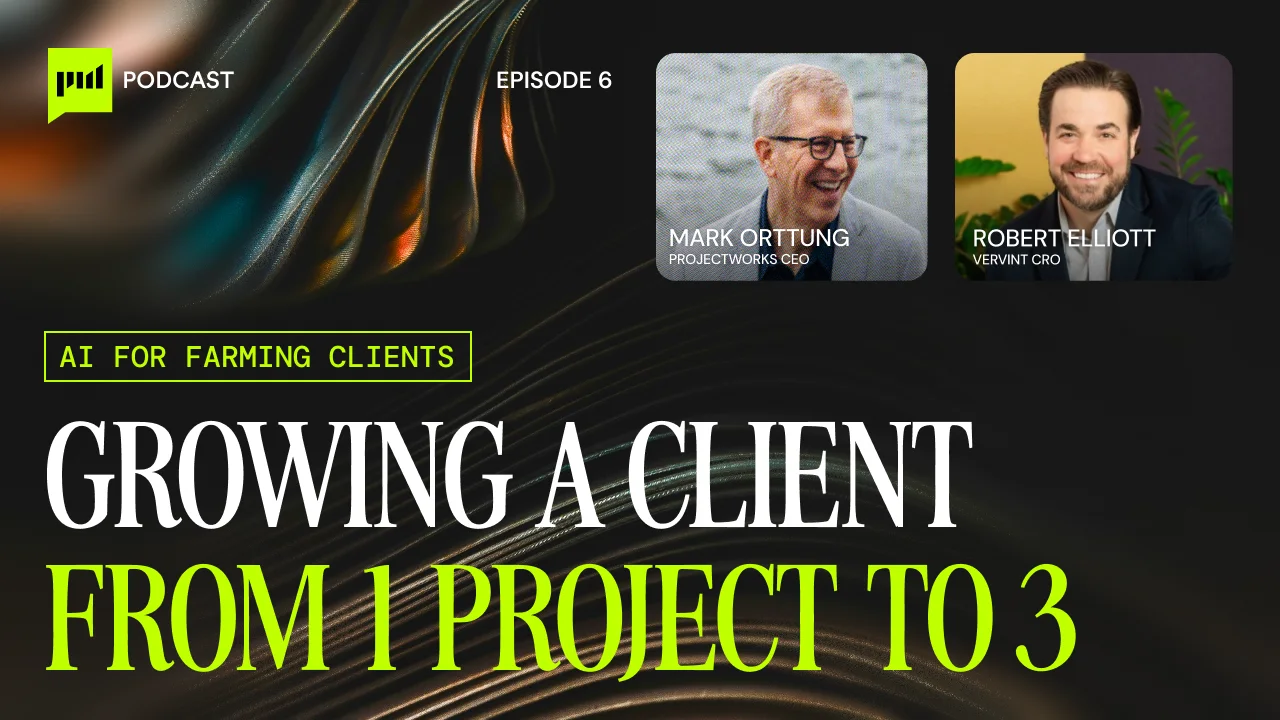
For many consulting firms, the one-project client is the norm and the long-term partnership is the exception, which is backwards given how much cheaper repeat work is to win. This episode is about making that step deliberate rather than accidental. We'll share the play-by-play breakdown of how fast growing firms identify the right client accounts it invest in, how they grow them, who's involved in the relationship, and where AI makes it all easier.
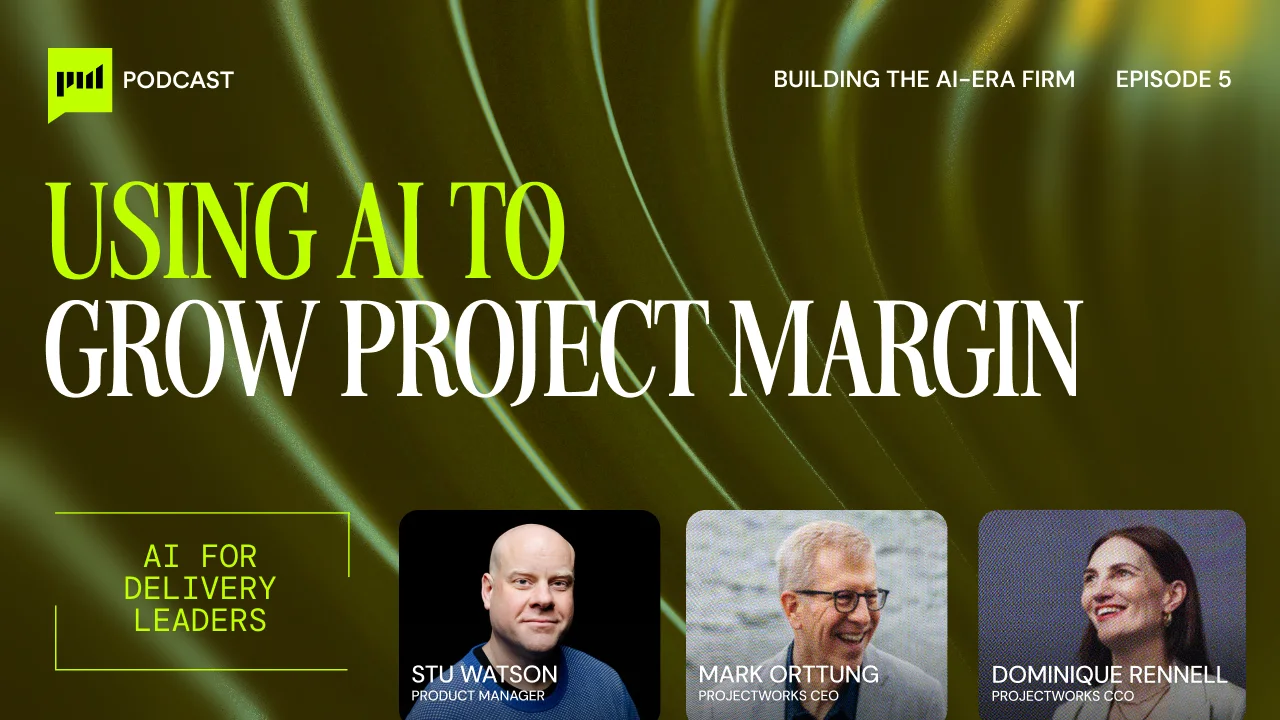
In a small firm, delivery quality holds because everyone works side by side and the founder touches every project. Then the firm grows, the founder runs out of hours, and work gets delivered by people who never learned your delivery method firsthand. Project margins turn inconsistent, and it's rarely the same reason twice. Most AI you've used so far waits for you to ask it something. Agents are different: they work in the background and tell you what needs attention before you'd have caught it yourself. This episode is about what that shift means for delivery, and we'll introduce Kea, the AI agent we're building inside Projectworks, and where we're taking it.
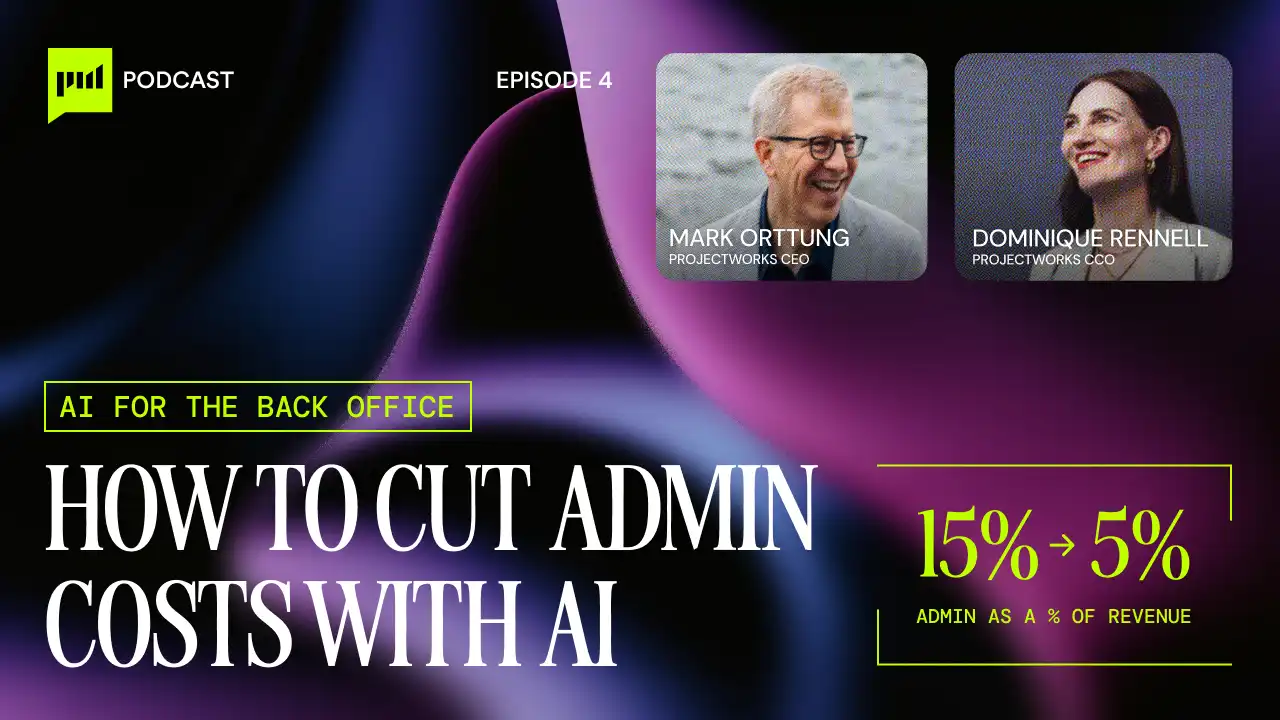
Timesheet chasing, invoicing, month-end, reporting, and the non-billable hours that go with them... its all necessary work in a consulting firm. Without it, clients don't pay you. It's costly though – for most firms, admin as a % of revenue sits at about 15%. Its a whole lot of cost that otherwise could be sitting in your EBITDA. In the AI era, the best consulting firms will bring this figure into the single digits. Learn how in this episode of the podcast.