Billions in the Pipeline: What UK Engineering Firms Need to Know in 2025




For small and mid-sized engineering consultancies in the UK, the difference between leading the next decade and being left behind comes down to readiness, operational discipline, and the ability to deliver under unprecedented pressure.
The UK’s engineering sector is at an inflection point. After years of political instability, the appointment of Keir Starmer’s government and its ambitious 10-year infrastructure plan has signaled a new era of opportunity. But opportunity doesn’t guarantee success.
A Wave of Investment, If You Can Capture It
Billions of pounds are being earmarked for public investment across housing, clean energy, defence, and infrastructure. Mega projects such as the Transpennine Route Upgrade, Sizewell C nuclear power station, and the Lower Thames Crossing aren’t just engineering challenges. They are delivery machines with layered risks, unforgiving timelines, and no tolerance for administrative missteps.
This is the kind of work that can transform a consultancy’s trajectory. Firms with the right systems, talent, and foresight will position themselves as essential partners in nation-defining projects. But those that enter without operational control risk more than just delays; they risk their reputation, margins, and future pipeline.
Why Discipline Is the True Competitive Advantage
Budgets are tightening while expectations rise. In this climate, discipline becomes the differentiator. Consider this: in mid-sized firms, a single resignation can stall a project, and one pricing misstep can wipe out profit margins. Large contractors may have buffers, but consultancies with 50–200 people must run lean, precise operations.
Discipline is not about cutting corners; it’s about having visibility across people, projects, and performance. It’s about knowing where risk is emerging before it’s too late. Firms that invest in operational clarity will shift from “busy” to “bulletproof.”
The Talent Equation
Perhaps the biggest barrier to capturing opportunity is the skills shortage. Engineering talent is scarce, particularly outside major metropolitan areas. Relying on hiring alone is a dead-end strategy. The consultancies that thrive will do so by reducing non-billable drag, optimising utilisation, and ensuring that scarce engineering expertise is focused where it creates the most client value.
Where Projectworks Fits In
This is where platforms like Projectworks shine. By providing visibility across resource planning and capacity management, project revenue forecasting, and project health and insights, consultancies can manage risk proactively and scale confidently. When billions are on the line, guesswork is a gamble you can’t afford.
The UK’s engineering future is bright. But in 2025, the firms that stand out won’t be the loudest or the largest. They’ll be the ones who’ve built the backbone to deliver under pressure.
Download the full UK Engineering Report to benchmark your firm’s readiness and schedule a consultation with Projectworks. Let’s position you for growth.
Next up in this Blog Series
Read Part 2: From Talent Gaps to Tech: How UK Engineering Firms Can Survive the Crunch where we tackle the skills shortage.


Read similar resources from Projectworks

Most pipeline coverage advice is written for SaaS. Here's how a consulting firm sets coverage by deal stage and plans for the clients it will lose.

Let’s say a consulting firm signs a $30,000 engagement in July and invoices the full fee upfront. The client pays quickly and the cash lands, but the work runs from July through September. By the end of July the firm has completed about one-third of the engagement - the project’s on track but the finance team have some work to do to match revenue with the costs incurred (the “matching principle” of having costs and revenue in the same period is a key accounting concept). Only a third of the project’s fee has been earned (because only a third of the work has been done), and the remaining $20k of revenue is deferred to a future period.
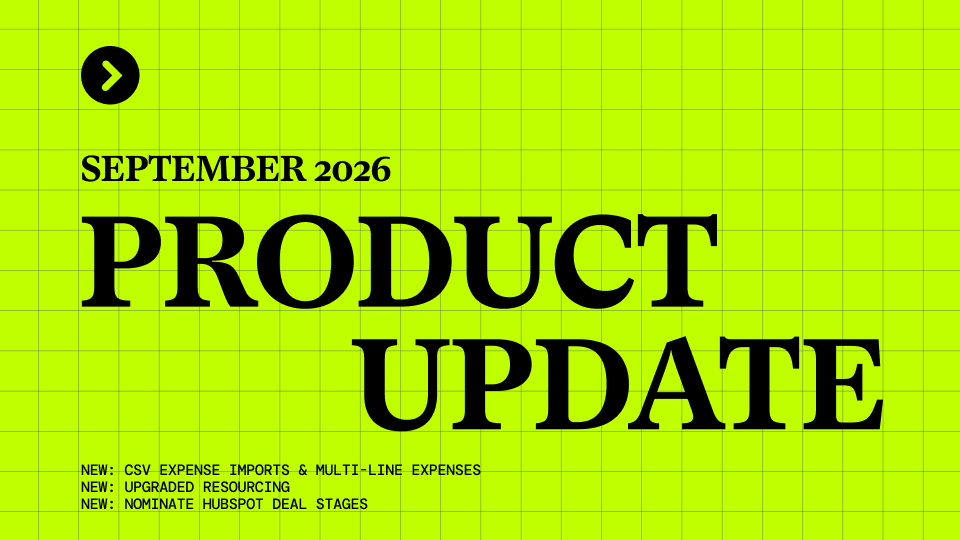
It's the end of September and expenses got a lot of love this month, with a couple of big changes you can start using today and more on the way! We've also made updates across financial reporting, resourcing, HubSpot, and invoicing, dive in to see what's new.