Change isn't optional anymore. Here's how to ride the reinvention rollercoaster.
Every consulting leader I speak to is feeling it: the clock’s ticking. You’ve got to hit the numbers, deliver the projects, win the work - and on top of all that, get ahead of the AI wave before it wipes your firm out. Spoiler alert — I don’t have all the AI answers, or a five-step playbook. What I do have is a ton of trial and error, and some lightbulb moments from Episode 03’s Z Suite conversation with bdna COO Karyn Smith.
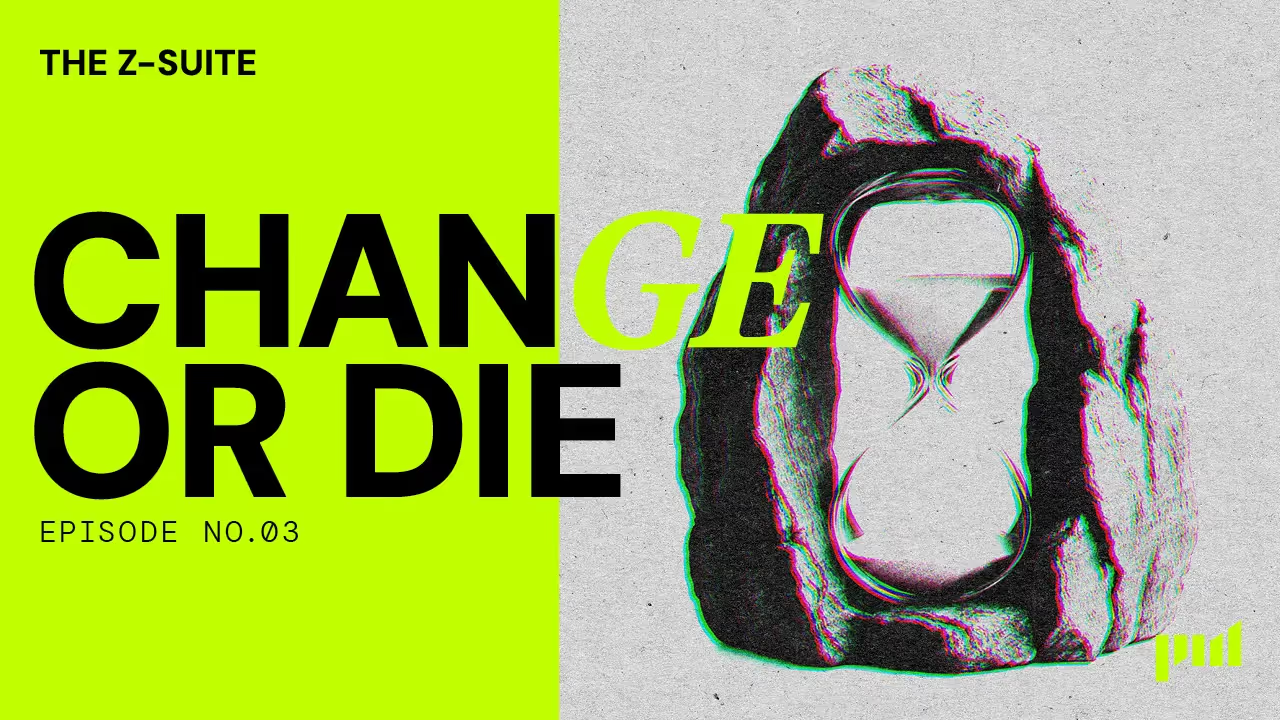



Your survival guide for the AI reinvention rollercoaster.
🫣 Embarrass yourself first
Karyn put it perfectly: “It feels like being the adult in the room trying to program the VCR while the 10-year-olds watch.”
That’s what AI feels like. And here’s the kicker: your people won’t risk looking silly if you won’t.
So lean into the awkwardness.
Build something badly.
Show them it’s safe to be a beginner.
Here’s how I’m embarrassing myself: I’m about to start vibe-coding a prototype in Replit — I know it’s going to be a mess, and I’ll have to do it in my nights and weekends, but it’s going to nudge my brain back into beginner mode, and show my team it’s OK for them to do the same.
↪️ Pivot the people, not the tech
The tech has already moved. The hard part is whether you can pivot your people — and help your clients pivot theirs. This is where consulting firms still have the biggest edge. Clients are terrified of the human stuff: fear, job security, new habits. They need you to help them through it, and no one has more empathy for how tough this stuff is right now than you. Lean into that empathy, lead with the human stuff — it’ll win your clients’ trust (and their work) way faster than pretending you have all the answers.
🧯Fire your inner expert
Spend a minute on LinkedIn and it can feel like everyone’s got a PhD in AI, except you. It’s terrifying — especially when you’re running a consulting firm and selling your expertise — to feel yourself slipping off the cutting edge.
But I’ll let you in on a secret: the only thing that can keep up with AI, is AI. Your job isn’t to have all the answers, it’s to help your team — and your clients — become perpetual beginners, learners, adapters and co-pilots of the thing that’ll always be moving faster than them.
Here’s how I’m firing my inner expert: I’m rereading a classic — Mindset by Dr Carol Dweck — because I’ve never needed a growth mindset more than I do right now.
❌ Don’t wait for certainty
Karyn reminded me of this: not making a decision is still making a decision. You’ll never have perfect information. And often when I look back, the thing I regret most isn’t the calls I made, it’s the calls I deferred. So stop waiting. Build just enough vision to take the next step, check what you've learned, and move again. Messy progress beats polished paralysis.
Here’s how I’m not waiting for certainty: I’ve challenged myself, and my team, to turn some of our biggest long-term pieces of work into terrifying 30-day experiments. It’s scary, but it’s also lowering the stakes and forcing us to make calls at the speed of AI.
🎓 Get yourself a Chad the Grad
I couldn’t agree more with Karyn on this one — you don’t need to be the smartest AI brain in the room, you just need to be the most curious and encouraging.
Walk the hallways, find the early AI adopters in your team, then empower, encourage and celebrate the heck out of them. They’ll become your firm’s AI capability community, and hopefully teach you a thing or two. For Karyn it was Chad, her team's newest graduate employee. Next week go find yours.
I wish I could tell you this gets easier. It doesn’t. But here’s what I know: your clients don’t need you to be an AI guru. They need you to be the one who helps them move, when they’d otherwise freeze. That’s the edge consulting firms still have — and it’s yours if you take it.
And remember: you’ve landed harder jumps than this before. You've got this.


Listen to moments from similar podcasts
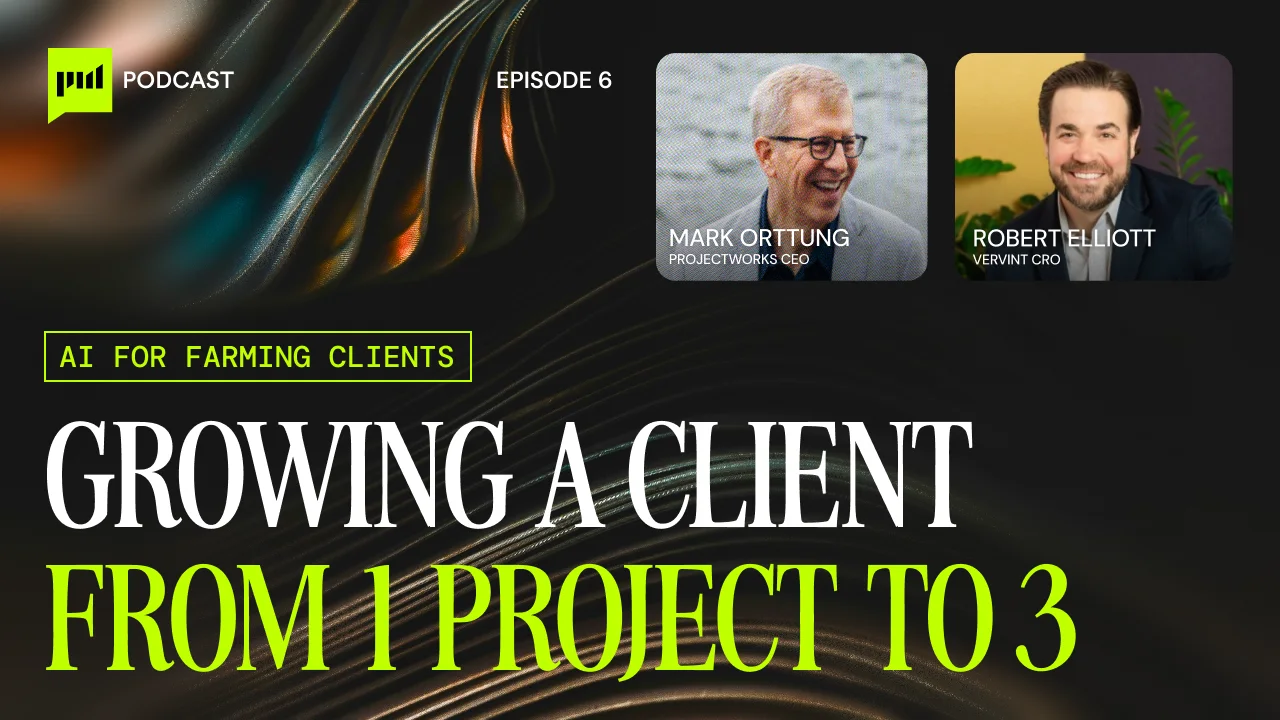
For many consulting firms, the one-project client is the norm and the long-term partnership is the exception, which is backwards given how much cheaper repeat work is to win. This episode is about making that step deliberate rather than accidental. We'll share the play-by-play breakdown of how fast growing firms identify the right client accounts it invest in, how they grow them, who's involved in the relationship, and where AI makes it all easier.
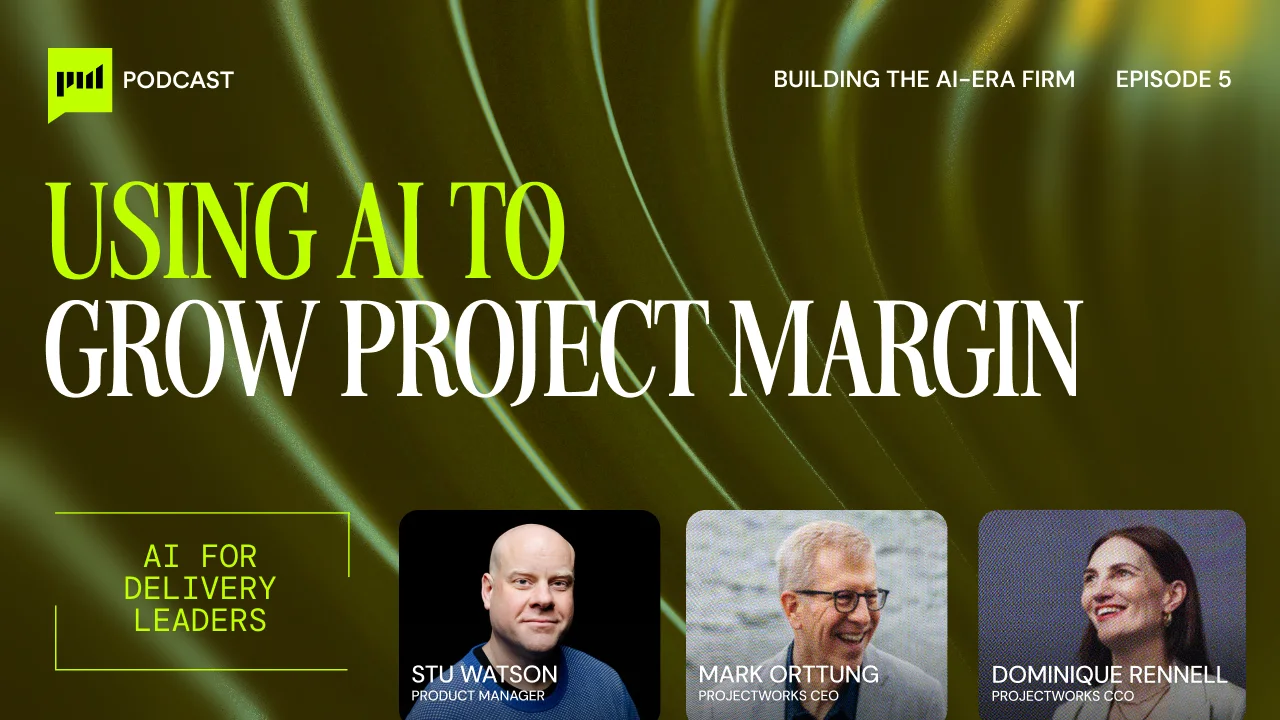
In a small firm, delivery quality holds because everyone works side by side and the founder touches every project. Then the firm grows, the founder runs out of hours, and work gets delivered by people who never learned your delivery method firsthand. Project margins turn inconsistent, and it's rarely the same reason twice. Most AI you've used so far waits for you to ask it something. Agents are different: they work in the background and tell you what needs attention before you'd have caught it yourself. This episode is about what that shift means for delivery, and we'll introduce Kea, the AI agent we're building inside Projectworks, and where we're taking it.
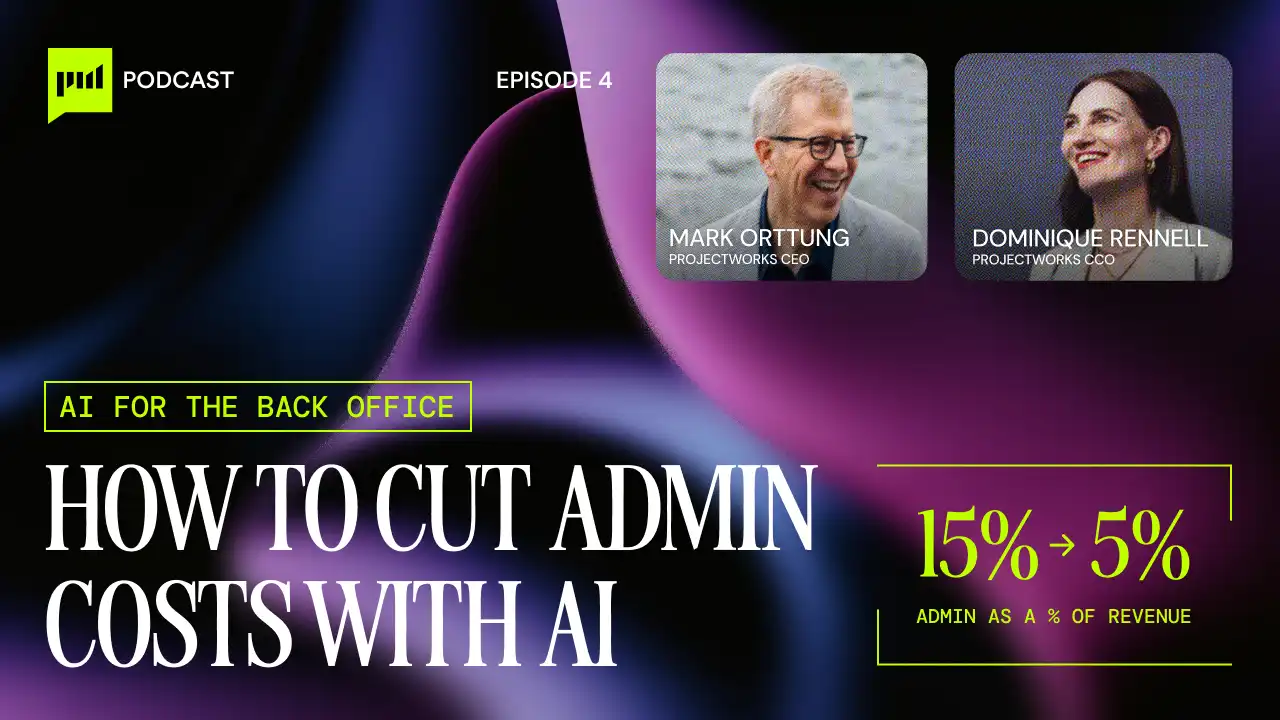
Timesheet chasing, invoicing, month-end, reporting, and the non-billable hours that go with them... its all necessary work in a consulting firm. Without it, clients don't pay you. It's costly though – for most firms, admin as a % of revenue sits at about 15%. Its a whole lot of cost that otherwise could be sitting in your EBITDA. In the AI era, the best consulting firms will bring this figure into the single digits. Learn how in this episode of the podcast.