


In the early stages of your consulting firm’s practice, tracking billable hours with spreadsheets was good enough. Your focus was on delivering high-quality work, and your relationship with your clients operated on implicit trust.
Scaling your business means not only getting more clients, but signing larger contracts with bigger clients. And as you move upmarket to chase larger contracts, client expectations change. The manual process and simple reporting your early clients accepted are not suitable for larger enterprises. In fact, they signal that your firm is not ready to handle their level of business.
Why Clients Expect Enterprise-Grade Time Reporting
Enterprise-level clients aren’t just buying your expertise; they are also relying on your processes. They have frequent internal audits, strict procurement processes, and need complete financial transparency from their partners. Every dollar spent needs to be justified to the CFO and ultimately the board.
If your method of documenting your billable hours involves a manually compiled spreadsheet, it can trigger any number of internal reviews, audits, and time-consuming conversations about missing details. These processes not only delay your payment, but jeopardize the health of your client relationship. Your firm is signaling that your processes are unreliable, and the lack of information the client needs forces them to do extra work as a result of partnering with your firm.
Building Client Trust Through Transparency
Becoming a trusted partner to an enterprise-level firm involves more than just high-quality work. Understanding the needs of their finance and C-suite teams is critical to winning enterprise level business and developing high-trust relationships at that level. Every hour worked and dollar billed needs to be documented and presented in a way that enables CFOs to immediately understand the value being delivered, and presented in a way that works with their internal processes. Your firm’s operational focus should center around flexibility and transparency. Questions you should be asking yourself about your clients are: “Are we meeting their transparency needs? How can we make it easier for them to approve and pay invoices? Can we more clearly show the value we are delivering?”.
Scaling Your Consulting Business Without the Administrative Overhead
Documenting and organizing the level of detail your firm needs to provide to enterprise-level clients can be an administrative nightmare when you are using spreadsheets for time tracking. In addition to dropped hours, the overhead of adding new detail to every hour worked can cause consultants to avoid logging their time until timesheets need to be submitted, forcing them to rely on memory, and leads to inaccuracies and gaps in your data.
Using PSA Software like Projectworks for time tracking and invoicing is the logical next step for firms looking to develop and grow into enterprise-level business relationships. Using automated time-tracking software removes the administrative burden from your consultants, ensuring your time tracking data is complete and consistent while making logging hours less time-consuming than using spreadsheets. And having your time-tracking and invoicing in the same software platform means that your data flows seamlessly from timesheet to invoice in any format that your client needs.
Providing the level of transparency that enterprise-level clients expect is the key to winning large contracts and growing your firm. Although it may seem that tracking hours more accurately and with a higher level of detail will be an administrative nightmare, when you use a dedicated PSA software solution for time tracking and invoicing, the opposite is true. Your consultants are freed from updating spreadsheets weekly, and invoicing with a high-level of detail becomes a breeze. You can get your firm enterprise-ready today by signing up for a free trial of Projectworks, or let us demo Projectworks for you.

Read similar resources from Projectworks
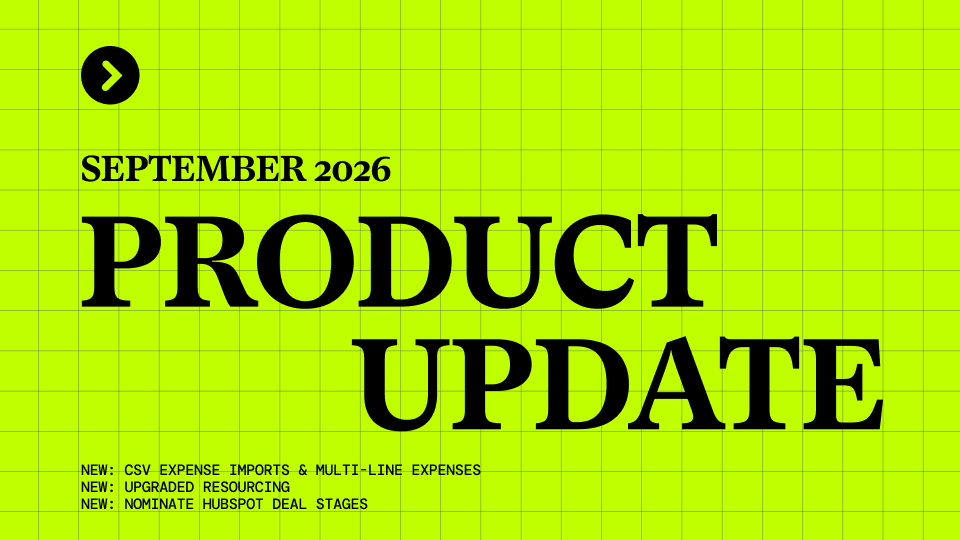
It's the end of September and expenses got a lot of love this month, with a couple of big changes you can start using today and more on the way! We've also made updates across financial reporting, resourcing, HubSpot, and invoicing, dive in to see what's new.
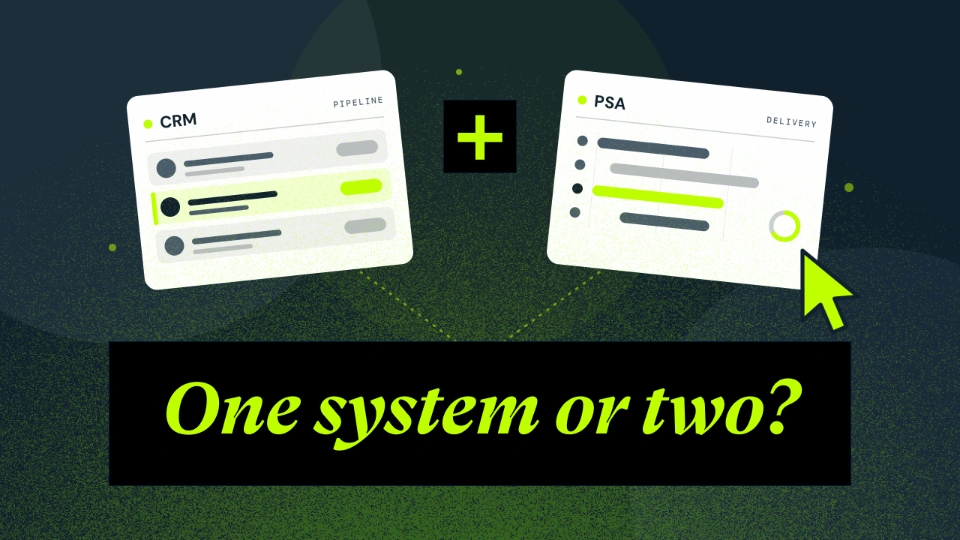
PSA software with built-in CRM, or a separate CRM? For consulting firms, one system usually wins. Here's why.
.png)
This is your guide to all the updates across Projectworks in the month of August. There's new and updated integrations, upgraded resourcing and the opportunity to join early access to Kea, our AI Agent - something for everyone!